

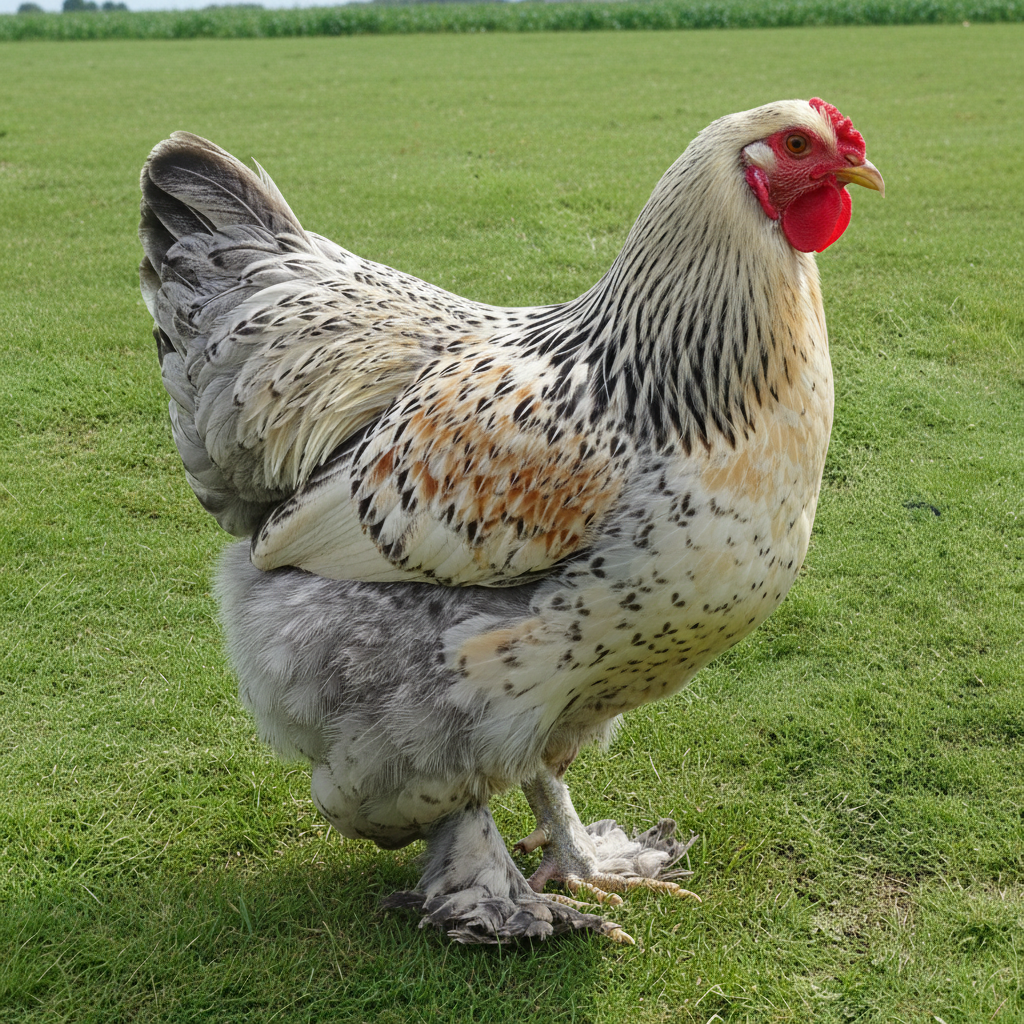
About the Brahma
Brahmas are large, heavy birds characterized by their striking appearance, featuring a calm demeanor and soft, fluffy feathers. They display distinct feathered legs and a prominent crest, contributing to their majestic look. Known for their gentle and friendly nature, Brahmas are excellent for families and beginners in chicken keeping. Their size and presence make them a standout breed in any flock.
History
Brahmas originated in the United States, deriving from birds brought over from India in the mid-1800s. They were developed in the U.S. primarily for meat production due to their substantial size. The breed quickly gained popularity, influencing numerous other chickens and becoming a favorite among backyard keepers.
Care tips
Brahmas thrive in cooler climates due to their feathering but can adapt to diverse environments. They require ample space to roam and display their gentle nature, making them suitable for free-ranging. Regular interaction is beneficial as they can be quite friendly but may be less active than other breeds, showing tendencies towards broodiness.
Color varieties
Fun facts
- Brahmas can weigh up to 12 lbs, making them one of the heaviest breeds.
- They are known for their impressive feathered legs and toes.
- Brahmas were once popular in chicken shows in the late 1800s.
- These birds can go broody and are good mothers if allowed to hatch chicks.
What life with Brahmas is really like
Brahmas are big, slow, feather-footed chickens with a calm nature. They are one of the largest breeds you can keep, and a full-grown rooster can look startling next to a normal hen. Most people find them gentle, and many keepers call them gentle giants.
Day to day they tend to move at their own pace, walking rather than running. They are easy to catch and usually tolerate handling well, so they are a good choice around kids, as long as the kids can manage a heavy bird. They are not great fliers, which makes them easy to contain with a modest fence.
Who Brahmas suit
- Cold climate keepers who want a hardy bird.
- Families who want a calm, easy to handle chicken.
- People who like a striking bird and do not need the most eggs.
They are a weaker fit for small coops, muddy yards or keepers who want maximum egg numbers. They also take a long time to mature.
Laying across seasons and age
Brahmas are slow to mature, and many pullets start laying later than lighter breeds. They lay medium brown eggs. One thing keepers like is that many Brahmas lay fairly well in fall and winter compared with lighter breeds, though nothing lays at full speed in the short days. Output is moderate overall, and some hens go broody, especially in spring.
Space, coop and climate
Size changes your coop plan. Brahmas need more room than average, wider pop doors, larger nest boxes and lower, sturdy roosts. Heavy birds jumping off a high roost can injure their feet, which is a common cause of bumblefoot. Give them more than the usual 4 square feet per bird inside if you can.
Their pea comb, small wattles and heavy feathering make them excellent in cold weather. Heat is the bigger challenge. In hot summers, give deep shade, good airflow and cool water, and watch for panting with wings held out.
Feathered feet and other quirks
- Feathered feet pick up mud and manure. Dry bedding and a well-drained run make a big difference.
- In winter, mud on foot feathers can freeze into balls, so check feet on cold, wet days.
- Scaly leg mites can hide under foot feathers. Look closely at the scales when you do health checks.
- Brahmas eat more than smaller breeds, which is worth factoring into feed costs.
Brahma vs Cochin and Jersey Giant
A Cochin is also big and feather-footed but is rounder and fluffier, usually lays less and is more often broody. The Jersey Giant is a very large clean-legged American breed. The Brahma vs Jersey Giant comparison goes into size, growth and eggs side by side.
Varieties and where to buy
Light, Dark and Buff are the classic varieties, and others show up from breeders. Hatchery Brahmas are easy to find and fine for backyard use, though they are often smaller than show-line birds. For bigger birds closer to the standard, look for breeders and poultry shows. Bantam Brahmas are also popular if you like the look but have less space.
Common questions about Brahmas
How big do Brahma chickens get?
They are one of the largest breeds. Roosters are noticeably bigger than hens, and show lines are larger than most hatchery birds.
Do Brahmas lay eggs in winter?
Many keep laying better in winter than lighter breeds, but expect fewer eggs in the shortest days.
Are Brahmas good with kids?
Yes, they are usually calm and gentle. Their weight means small children may struggle to hold them.
