

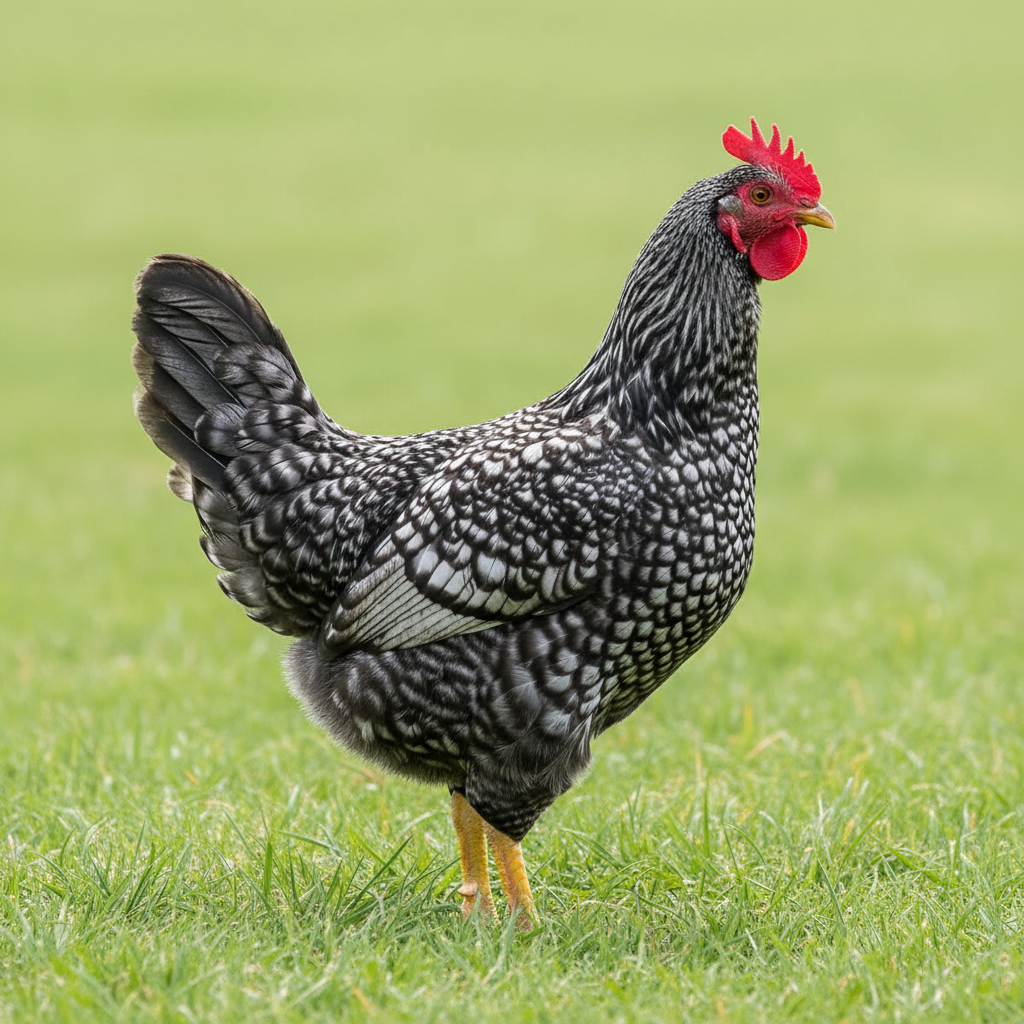
About the Dominique
Dominique chickens are known for their distinctive robin’s egg blue eggs and unique barring pattern. They have a calm and friendly demeanor, making them great companions in the backyard. Their robust build and beautiful plumage set them apart, showcasing their historical significance as one of America’s first breeds.
History
Dominique chickens originated in the United States, with roots tracing back to the 18th century. They were developed in New England and spread throughout the country due to their reliability as a dual-purpose breed, providing both meat and eggs.
Care tips
Dominique chickens are hardy and adapt well to various environments, but they thrive with sufficient space and shelter. They’re known for being moderately broody, so expect them to sometimes take on maternal instincts. Regular interaction helps maintain their friendly nature.
Color varieties
Fun facts
- Dominique is recognized as America’s oldest breed of chicken.
- They were a popular choice among early American settlers.
- Dominique chickens have a unique rose comb that adds to their charm.
- Their plumage is patterned in a distinctive barred design.
What Dominiques are like to keep
The Dominique is often called America's oldest chicken breed. It was common on farms in the 1800s and nearly vanished in the 20th century before preservation work brought it back. Dominiques are barred black and white, with a rose comb and a medium, practical body.
They are calm, friendly and easy to keep. Many keepers say they are good at foraging and handle themselves well in a free range flock.
A day with Dominiques
Dominiques are practical birds. They spend the day scratching through leaves and grass, and they are good at finding bugs and seeds on their own. Their barring helps them blend into the ground, which is one reason old farm keepers liked them. They are usually quiet and steady, and hens rarely cause trouble in a mixed flock. Roosters are generally manageable, though like any rooster they should be watched around small kids.
Dominique vs Barred Rock
The two look alike, but there are clear differences. The Barred Plymouth Rock has a single comb. The Dominique has a rose comb. Dominique barring is often described as less crisp, more of a cuckoo look. Dominiques are also usually smaller. The Amrock is another barred breed, but it has a single comb like a Rock.
Eggs and seasons
- Reliable brown egg layers, light to medium in shade.
- Eggs are usually medium in size.
- Some hens go broody and make good mothers.
Space and climate
Dominiques fit standard coop space. Their rose comb resists frostbite, making them good for cold climates. They also handle heat fairly well with shade. Their barred feathers are good camouflage when free ranging.
Who they suit
Dominiques suit beginners, families and anyone wanting a hardy heritage breed. They do well in mixed flocks.
Laying across the years
Pullets usually start at a normal age for a medium heritage breed. Expect the best laying in the first two seasons, with a gradual decline after that. Hens often keep laying at a lower rate for several more years, which suits keepers who do not want to replace birds often.
Where to buy
Dominiques are a conservation breed, but they are fairly easy to find. Many hatcheries and breeders sell them.
Common questions about Dominiques
How can I tell a Dominique from a Barred Rock?
Look at the comb. Dominiques have a rose comb. Barred Rocks have a single comb.
Are Dominiques good layers?
Yes. Yes, they lay brown eggs well.
Are Dominiques cold-hardy?
Yes. Their rose comb helps prevent frostbite.
