

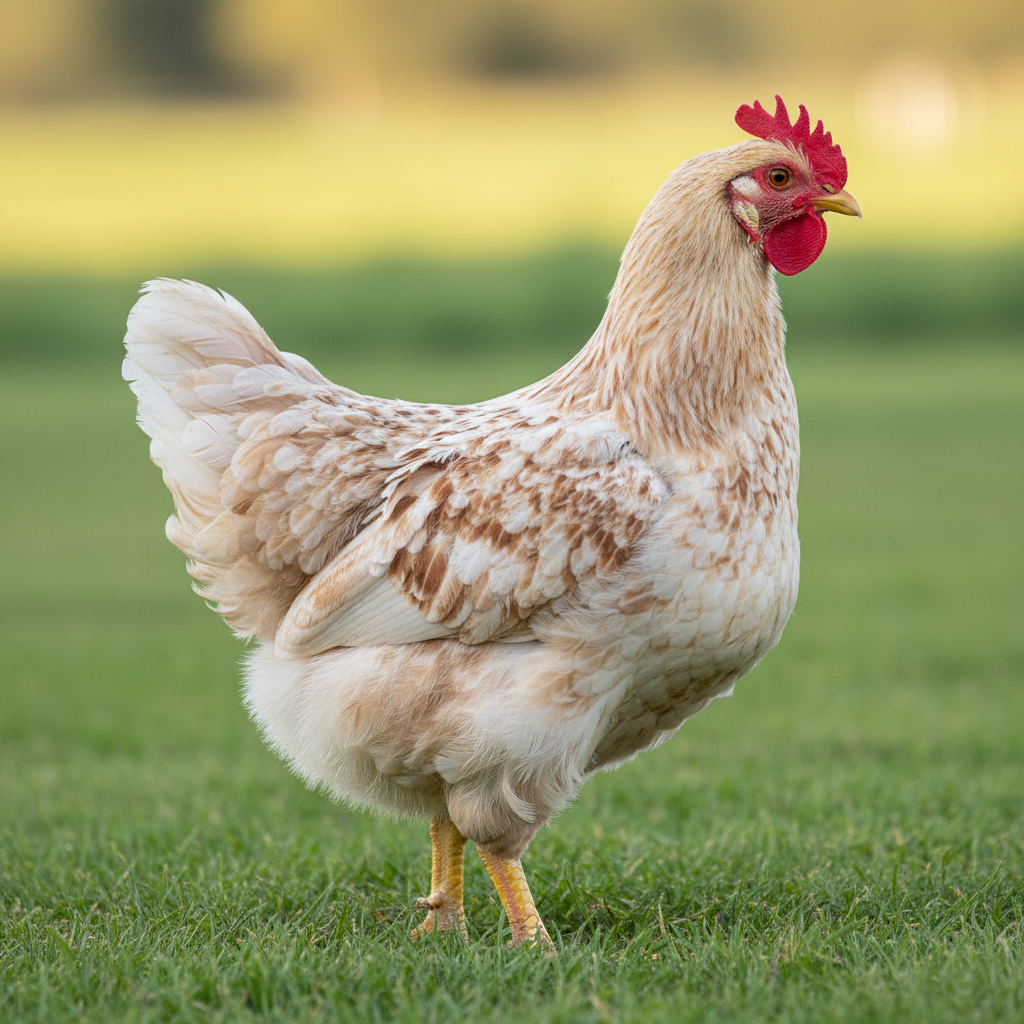
Frizzle
Any breed with the frizzled feather gene.
Is the Frizzle right for you? Take the Breed Matcher →About the Frizzle
Frizzles are notable for their unique feather structure, where the feathers curl outward, creating a distinctive appearance. They typically have a friendly temperament and can be quite sociable with humans and other birds. Their curled feathers can vary in tightness, influencing their overall look. Frizzles can be found in both Standard and Bantam sizes, making them adaptable to various backyard spaces.
History
The Frizzle feather trait is believed to have originated in Asia and may have emerged from various chicken breeds over centuries. This unique feathering has been selectively bred and spread worldwide, becoming popular for ornamental purposes in backyard flocks.
Care tips
Frizzles may require extra attention to feather maintenance, as their unusual feathering can be prone to damage. Providing adequate shelter from wet weather is important to prevent health issues. They are generally hardy but may struggle in extreme cold due to their feather structure.
Color varieties
Fun facts
- Frizzles can come from a variety of base breeds, each influencing their overall appearance.
- The frizzled feather gene can cause their feathers to behave differently in different circumstances.
- Frizzles are often bred with Silkies to create visually stunning hybrids.
- They are known to be curious and playful, making them entertaining pets.
What it is like to keep Frizzles
A Frizzle has feathers that curl outward and forward instead of lying flat. The effect is a bird that looks like it walked through a wind tunnel. In the US, the Frizzle is treated as a breed by the American Poultry Association. In many other places, frizzling is treated as a feather type that can appear in many breeds, such as Cochins, Polish and Japanese Bantams.
Frizzles are usually calm and friendly, and they are popular with families.
How frizzling is inherited
The frizzle gene is incompletely dominant. A bird with one copy is a frizzle. A bird with two copies is often called a frazzle, or over-frizzled, with brittle feathers that break easily and can leave bald patches. A bird with no copies has smooth feathers. Breeding frizzle to frizzle gives roughly a quarter frazzle, half frizzle and a quarter smooth. Breeding frizzle to smooth avoids frazzles.
Care needs
- Frizzled feathers insulate less and shed rain poorly, so keep birds dry and out of drafts.
- They may struggle in cold, wet weather more than smooth breeds.
- Curled feathers make them poor fliers, so they are easy to contain.
- Check for mites and lice, which can hide in the feathers.
Eggs and temperament
Egg color, size and number depend on the breed the frizzle is in. Most frizzled birds are kept for looks and personality rather than production.
Climate
Frizzles do best in mild, dry climates. In cold areas, give a dry coop with good ventilation and no drafts. In heat, give shade.
Compared with similar birds
Silkies also have unusual feathers. A cross between a Silkie and a Frizzle is sometimes called a Sizzle. See the Silkie page for more. Frizzled Cochins are among the most common frizzles.
Where to buy
Many hatcheries sell frizzles, often as bantam Cochins or as a mixed listing.
Common questions about Frizzles
Is a Frizzle a breed?
In the US, yes. In many places, it is a feather type found in several breeds.
What is a frazzle?
A bird with two copies of the frizzle gene, with brittle feathers that break easily.
Can Frizzles fly?
Not well. Their curled feathers make flying hard.
