

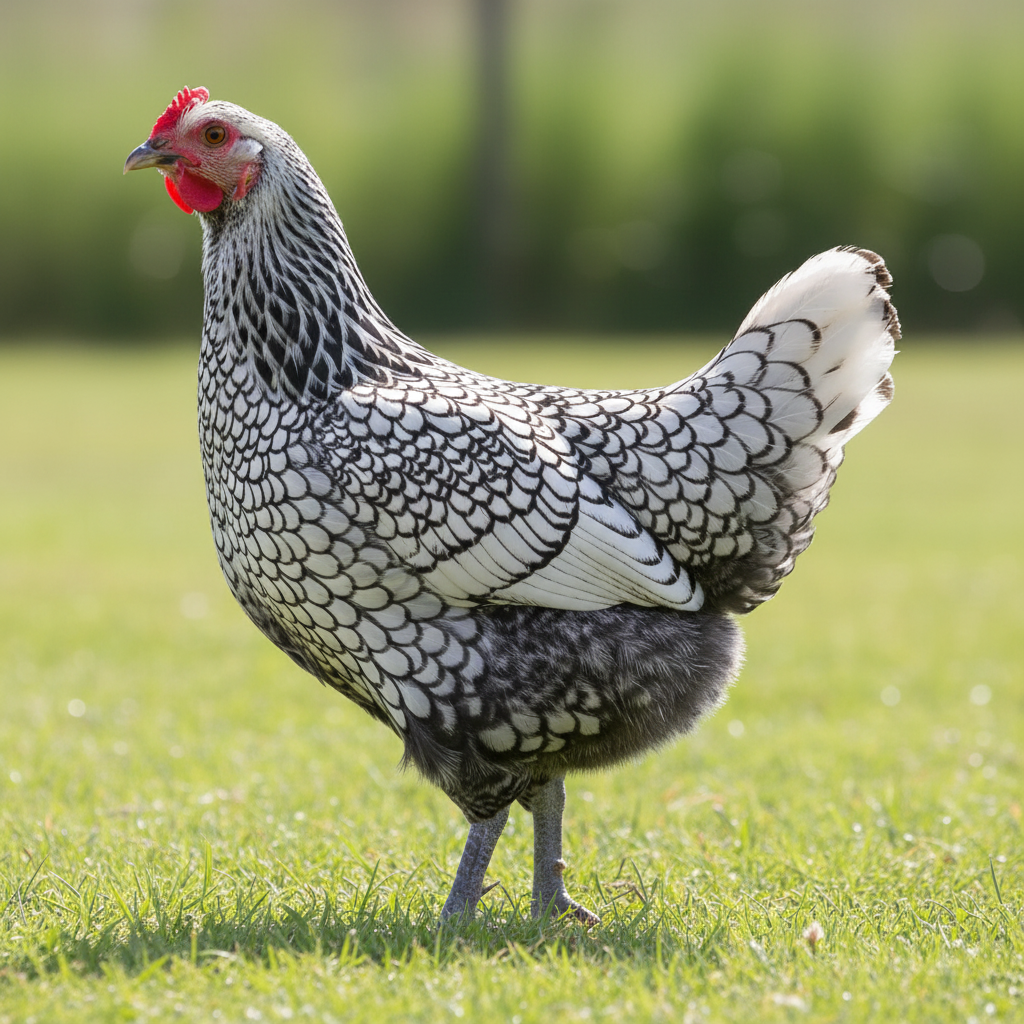
Hamburg
Flighty heritage layer with spangled feathers.
Is the Hamburg right for you? Take the Breed Matcher →About the Hamburg
Hamburgs are known for their distinctive spangled feathers, which shimmer in sunlight. They possess a slim, upright body and a tight-fitting feather coat. Their flighty demeanor makes them quite active and curious, requiring a safe environment to explore. This breed is noted for its exceptional egg-laying capabilities, producing small to medium-sized white eggs.
History
The Hamburg breed originated in Holland and dates back to the 14th century. It was developed primarily for its egg-laying abilities and soon spread to England and North America through trade. As one of the earliest known layer breeds, Hamburgs have influenced various other breeds in the quest for high egg production.
Care tips
Hamburgs are relatively hardy but appreciate protection from harsh weather conditions. They are not known for being broody, making them easier to manage for egg production. Providing them with ample space to roam and forage helps keep them healthy and reduces their flightiness. Regular handling can aid in their socialization.
Color varieties
Fun facts
- Hamburgs were one of the first breeds imported to America in the 19th century.
- Their spangled plumage can come in various colors, including black, silver, and gold.
- Hamburgs are known for their high egg production, often laying 200-250 eggs annually.
- This breed was once featured in the famous poultry shows of the early 20th century.
What Hamburgs are like to keep
The Hamburg is a light, elegant breed with a rose comb, white earlobes and slate blue legs. Despite the German-sounding name, its roots are usually traced to the Netherlands as well as Germany and Britain. Silver Spangled is the best known color, with black spots on a white body. Golden spangled, penciled and black also exist.
Hamburgs are active, flighty and fast. They forage well, fly well and often roost in trees if allowed. They are not cuddly, but they are fun to watch.
Who they suit
- Free range setups with room to roam.
- Keepers wanting white eggs from a small, hardy bird.
- Anyone wanting a striking, active breed.
They are a poor fit for small runs, families wanting pets or keepers who want broody hens.
Eggs and seasons
Hamburgs are good layers of small to medium white eggs. They are rarely broody. Spring and summer are their best laying months.
Space and climate
Hamburgs need space. In small runs they can get stressed. Cover the run, since they fly very well. The rose comb resists frostbite, and they are generally hardy in cold. They handle heat well with shade.
Living with flighty birds
Hamburgs do not like being caught. Train them to come in at dusk with a little scratch, and close them in for the night. A fully covered run saves a lot of chasing. Because they are so active, they also get bored in bare runs, so give them perches and areas to scratch.
Compared with similar breeds
The Campine is another light, active white egg layer with barring. The Friesian is a small Dutch breed with similar penciled patterns and a single comb.
Where to buy
Many hatcheries sell Silver Spangled Hamburgs. Other colors are harder to find. Bantams are also available.
Common questions about Hamburgs
Are Hamburgs good layers?
Yes. Yes, white eggs and plenty of them for a heritage bird.
Do Hamburgs fly?
Yes. They fly very well.
Are Hamburgs friendly?
Not usually. They are active and flighty.
