

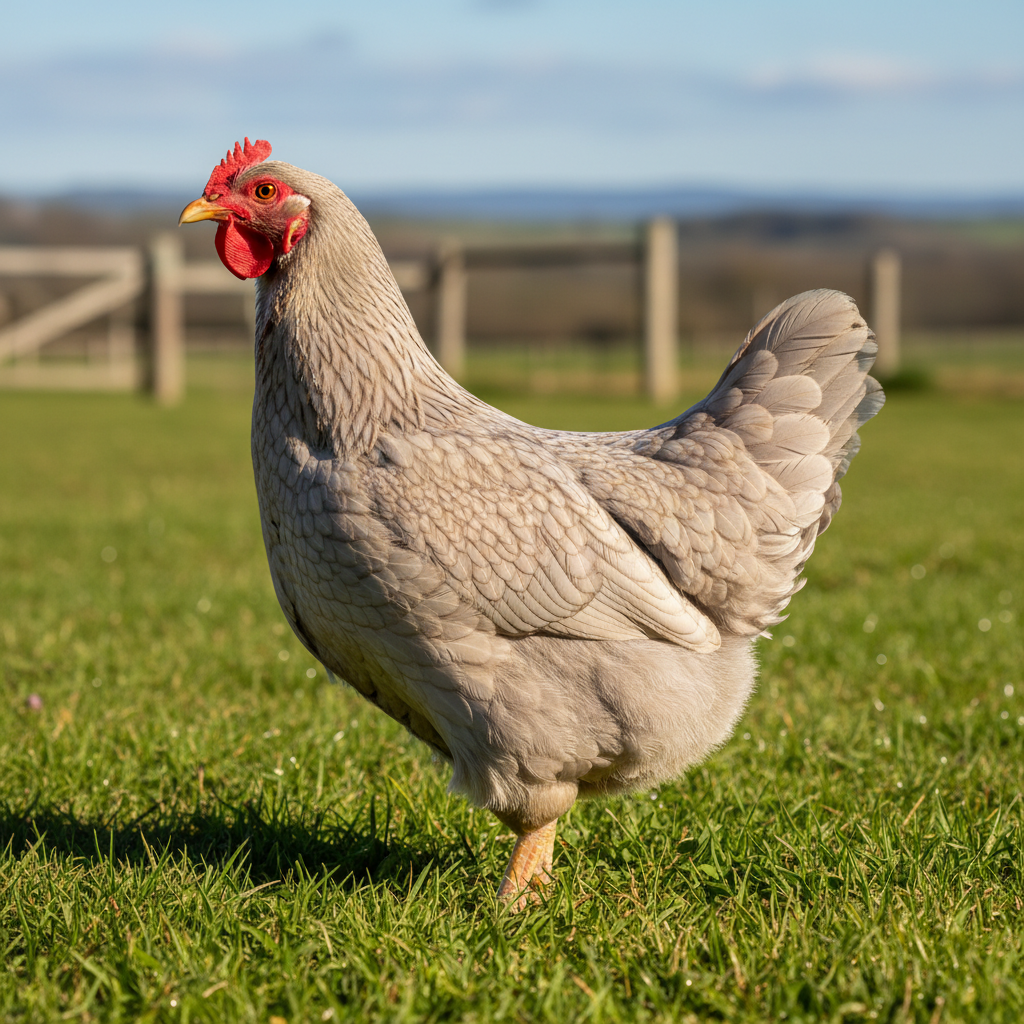
Lavender Orpington
Also known as Self Blue Orpington
Also known as: Self Blue Orpington
Is the Lavender Orpington right for you? Take the Breed Matcher →About the Lavender Orpington
The Lavender Orpington features a soft silver-lavender plumage that is both striking and silky. They are known for their friendly and docile temperament, making them ideal for family farms and backyard coops. Their robust build and gentle nature make them excellent foragers and social birds, often adapting well to confinement. This breed is distinctive not only for its color but also for its ability to be both a reliable layer and a good meat bird.
History
The Lavender Orpington is a color variant of the Orpington breed developed in England in the late 19th century. The breed was created by crossing Black Orpingtons with other breeds to produce the unique lavender color. Over time, the Lavender Orpington gained popularity due to its aesthetic appeal and dual-purpose capabilities, spreading to various countries, especially among backyard keepers.
Care tips
Lavender Orpingtons are hardy birds that adapt well to different climates, though they prefer a sheltered area to stay cool in hot weather. They can be somewhat broody, making them good candidates for hatching eggs if you’re looking to expand your flock. Provide ample space for them to forage, as they enjoy scratching and pecking around. Additionally, ensure a balanced diet to maintain their health and vibrant plumage.
Color varieties
Fun facts
- Lavender Orpingtons are known for their calm and friendly demeanor.
- They lay medium-sized brown eggs, typically 180-200 eggs per year.
- This breed’s lavender color is a result of a dilution gene in their genetics.
- Lavender Orpingtons often bond well with other breeds, promoting flock harmony.
What sets the Lavender Orpington apart
A Lavender Orpington is an Orpington in a pale, silvery gray-blue color. It has the same big, soft body, calm temperament and light brown eggs as other Orpingtons. The difference is one gene. Lavender is a recessive dilution that turns black pigment into that soft dove gray.
It breeds true
Because lavender is recessive, a lavender bird carries two copies of the gene. Breed two lavenders together and all the chicks will be lavender. That is different from the more common Blue Orpington, where blue to blue matings give a mix of blue, black and splash chicks. If you want a whole flock of matching gray birds, lavender is the easier color to keep consistent.
Feather quality and sun
Some lavender lines have weaker feathers that fray or look ragged, especially in the tail and wings. Breeders have worked on this for years, so quality varies a lot between flocks. Look at the adult birds before you buy. Strong sun can also bleach lavender feathers to a brassy or tan shade. Shade in the run helps keep the color even, which matters most if you plan to show.
Living with them
Care is the same as any Orpington. They are cold-hardy, struggle more in heat, and need extra checking for mites in their thick fluff. Hens go broody fairly often and are gentle mothers.
Where to get them
Lavender Orpingtons are mostly sold by breeders, and some hatcheries offer them too. They usually cost more than Buff Orpingtons. Also see the Wyandotte vs Orpington comparison if you are still choosing a heavy breed.
Common questions about Lavender Orpingtons
Are Lavender Orpingtons good layers?
They lay about as well as other Orpingtons, a fair number of light brown eggs.
What is the difference between blue and lavender Orpingtons?
Blue is a different gene that does not breed true. Lavender is recessive, so lavender to lavender gives all lavender chicks.
Why do some lavender chickens look tan?
Sun can bleach the feathers. Shade helps keep them a cleaner gray.
