

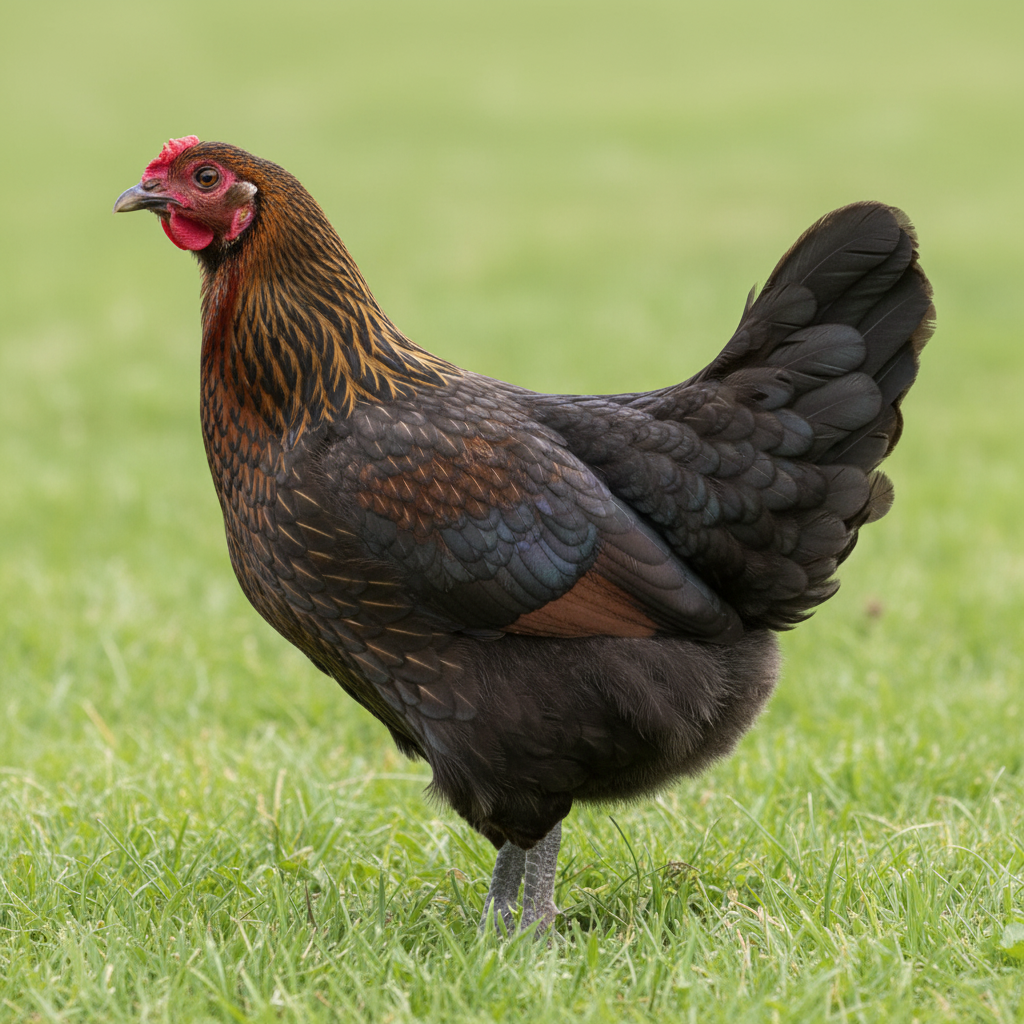
Olive Egger
Hybrid that lays olive-green eggs.
Is the Olive Egger right for you? Take the Breed Matcher →About the Olive Egger
Olive Eggers are known for their striking olive-green eggs, resulting from the cross of blue and brown egg layers. These birds often have a mix of plumage colors, typically displaying earthy tones like black, brown, and gray. They are friendly and social, making them a good choice for backyard flocks. Their curious nature and adaptability also make them relatively easy to manage.
History
The Olive Egger is a hybrid breed that originated in the United States, developed in the late 20th century. Breeders sought to create a chicken that would produce unique olive-green eggs by crossing various breeds, notably those that lay blue and brown eggs. The popularity of Olive Eggers has grown among backyard keepers looking for striking egg colors.
Care tips
Olive Eggers are generally hardy birds but prefer moderate climates and plenty of space to roam. Providing them with a balanced diet will enhance their egg production and overall health. While they are not typically broody, some individuals may exhibit this behavior, so be prepared for the possibility. Regular interaction and enrichment are essential for their well-being.
Color varieties
Fun facts
- Olive Eggers can produce a range of egg colors, from light to dark olive.
- They are a mixed breed, often crossbred from Araucanas and Rhode Island Reds.
- Olive Eggers can have a variety of feather patterns, making each bird unique.
- They are friendly and sociable, making them great companions in the backyard.
What you are really getting with Olive Eggers
An Olive Egger is not a breed. It is a cross between a hen or rooster that lays blue eggs and one that lays dark brown eggs. Blue egg genes come from birds like the Ameraucana, Araucana, Cream Legbar and many Easter Eggers. Dark brown comes from Marans, Welsummers, Barnevelders and similar breeds. The blue shell gets a brown coating on top, and the result is green to olive. Crack one open and the inside of the shell is blue or green, which shows you where the color comes from.
Because there is no breed standard, Olive Eggers do not all look alike. One hatch might give you black birds, partridge birds, birds with muffs and beards, and birds with clean faces. Many have pea combs from their blue egg parent, which is a bonus in cold weather.
Egg color depends on the parents
The shade you get comes down to how blue the blue side is and how dark the brown side is. A first generation cross from a good Marans and a good blue layer usually gives a solid olive. Some breeders cross those offspring back to Marans to push the color darker and deeper. A cross using a light brown layer gives a paler, sage green. The brown layer on top fades through the laying season the same way it does on Marans eggs, so the same hen may lay a darker olive in spring and a lighter one by late summer.
Laying pattern
Most Olive Eggers are decent layers, often better than their Marans parent. Like other backyard birds they slow down in winter and stop during the molt. Their output depends heavily on the parent breeds, so ask the seller what was used.
Temperament and care
Temperament also varies with the cross. Many are calm and curious. Some take after a flighty parent. Care is the same as for any standard-size backyard chicken. If your birds have muffs and beards, check them for mites now and then, since parasites like to hide in thick feathering. Birds with feathered legs from Marans lines need a dry run.
Climate notes
Olive Eggers handle cold well as a rule, especially pea-combed birds. In heat they do fine with shade and water. There is nothing about the cross itself that makes them fragile.
How they compare
The closest relative is the Easter Egger, which is also a mixed bird but lays blue, green or sometimes pink-tinted eggs depending on its genes. The Easter Egger vs Olive Egger comparison lays out the difference. Hatchery hybrids like the Sapphire Gem are also sold as colorful backyard layers but lay brown eggs.
Where to get them
Many US hatcheries sell Olive Eggers, and lots of small breeders sell chicks or hatching eggs from their own crosses. You can also make your own by putting a dark-egg rooster over blue-egg hens or the other way round. If the egg shade matters, ask to see eggs from the actual parent birds.
Common questions about Olive Eggers
Do Olive Eggers breed true?
No. Breeding two Olive Eggers together gives a mix of egg colors, including blue, green and brown.
How dark green will the eggs be?
It depends on the parents. Darker brown parents give darker olive eggs. Lighter brown parents give paler green.
When do Olive Eggers start laying?
Usually at about the same age as other standard backyard breeds, around five to six months, though it varies with the cross and the season.
