

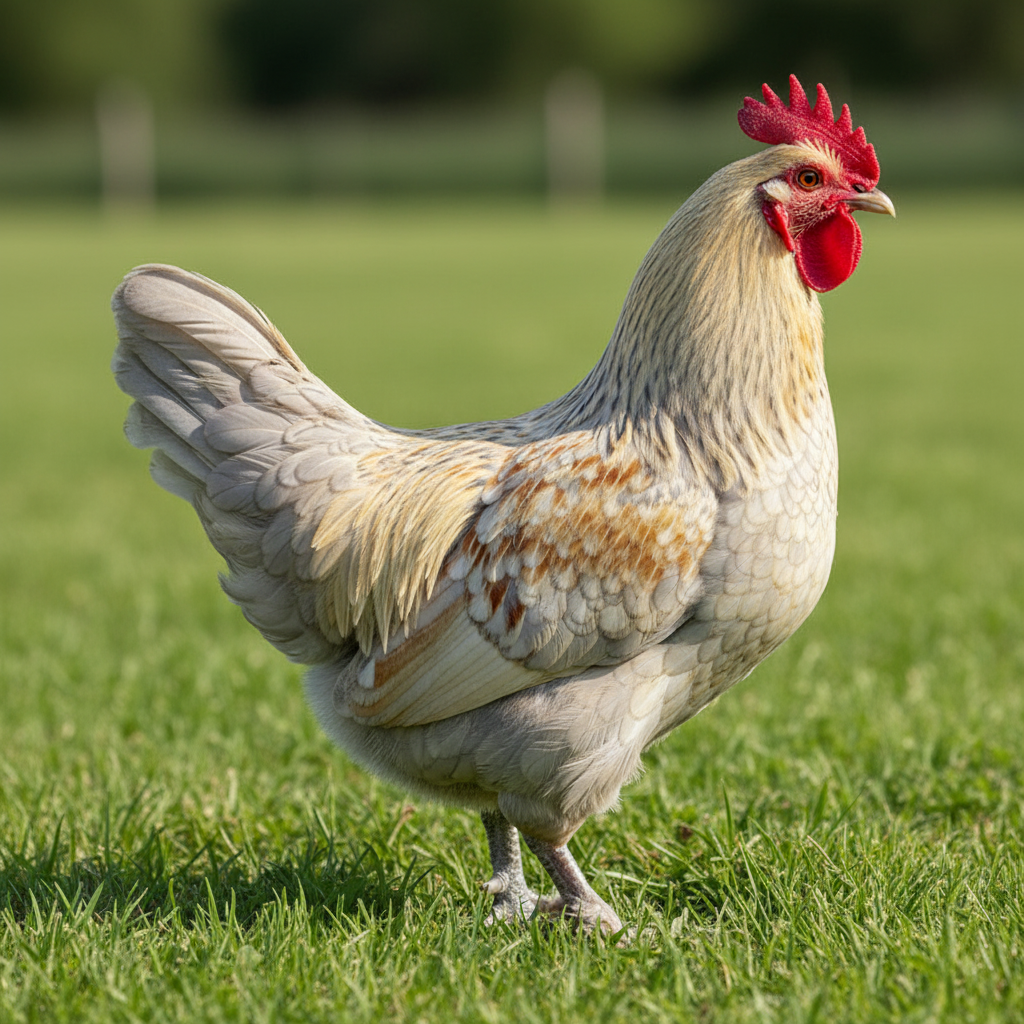
Porcelain d’Uccles Bantam
The Porcelain d’Uccles Bantam is a charming ornamental breed known for its striking plumage.
Is the Porcelain d’Uccles Bantam right for you? Take the Breed Matcher →About the Porcelain d’Uccles Bantam
The Porcelain d’Uccles Bantam is renowned for its gorgeous feather patterns, featuring a unique blend of white and gray-blue. This small breed has a friendly demeanor, making it a delightful addition to backyard flocks. With feathered shanks and distinct beard muffs, they stand out in any poultry collection. Their ornamental value far surpasses their egg production capabilities.
History
The Porcelain d’Uccles Bantam originated in the late 19th century in Belgium as a decorative breed. Developed from the d’Uccles breed, they quickly gained popularity for their beautiful appearance and gentle nature. They were introduced to North America in the early 20th century, becoming favorites among fanciers.
Care tips
Porcelain d’Uccles Bantams thrive in smaller spaces, making them suitable for urban settings. They tend to be broody and can successfully raise chicks if allowed. Ensure they have a cozy environment with access to nesting boxes. Their gentle temperament makes them good companions, but they can be timid.
Fun facts
- Porcelain d’Uccles come in various color patterns, but the porcelain variety is the most popular.
- They are known for their feathered feet and legs which add to their unique appeal.
- This breed is a descendant of the larger d’Uccles breed and was developed for ornamental purposes.
- Porcelain d’Uccles Bantams are friendly and often enjoy interaction with their keepers.
How the Porcelain d'Uccle differs from other colors
Porcelain is a color of the Belgian d'Uccle bantam. It is the same pattern as the Mille Fleur, with each feather showing a band and a white tip, but with the lavender gene added. That softens the base to a pale straw or cream and turns the black bands into a soft lavender blue. The effect is light, delicate and very pretty, which is why it is a popular color for pet and show birds.
It breeds true for color
Lavender is recessive, so a Porcelain carries two copies. Mating two Porcelains gives Porcelain chicks. Crossing a Porcelain to a Mille Fleur gives Mille Fleur looking chicks that carry the lavender gene hidden.
Keeping a pale bird clean
Light feathers show every bit of dirt, and the heavily feathered feet stain quickly in a muddy run. Sand, dry bedding and a covered run help. Strong sun can also discolor pale and lavender feathers over time, so shade is good for both comfort and color.
Breed traits
Underneath the color it is a d'Uccle. Expect a calm, friendly bantam with a beard, muffs, a single comb and feathered feet. Hens lay small cream eggs and often go broody. They are a good fit for families who want a gentle bird. Check foot feathers for mites and mud regularly.
Related pages
See the Mille Fleur d'Uccle for the most common color of this breed, and the Booted Bantam for its beardless relative.
Common questions about Porcelain d'Uccles
Are Porcelain d'Uccles rare?
They are less common than Mille Fleurs but sold by several hatcheries and many bantam breeders.
Are Porcelain d'Uccles good for kids?
Yes. They are small, calm and usually easy to handle.
Do Porcelain d'Uccles change color as they age?
The white tips often increase with each molt, just as in Mille Fleurs.
