

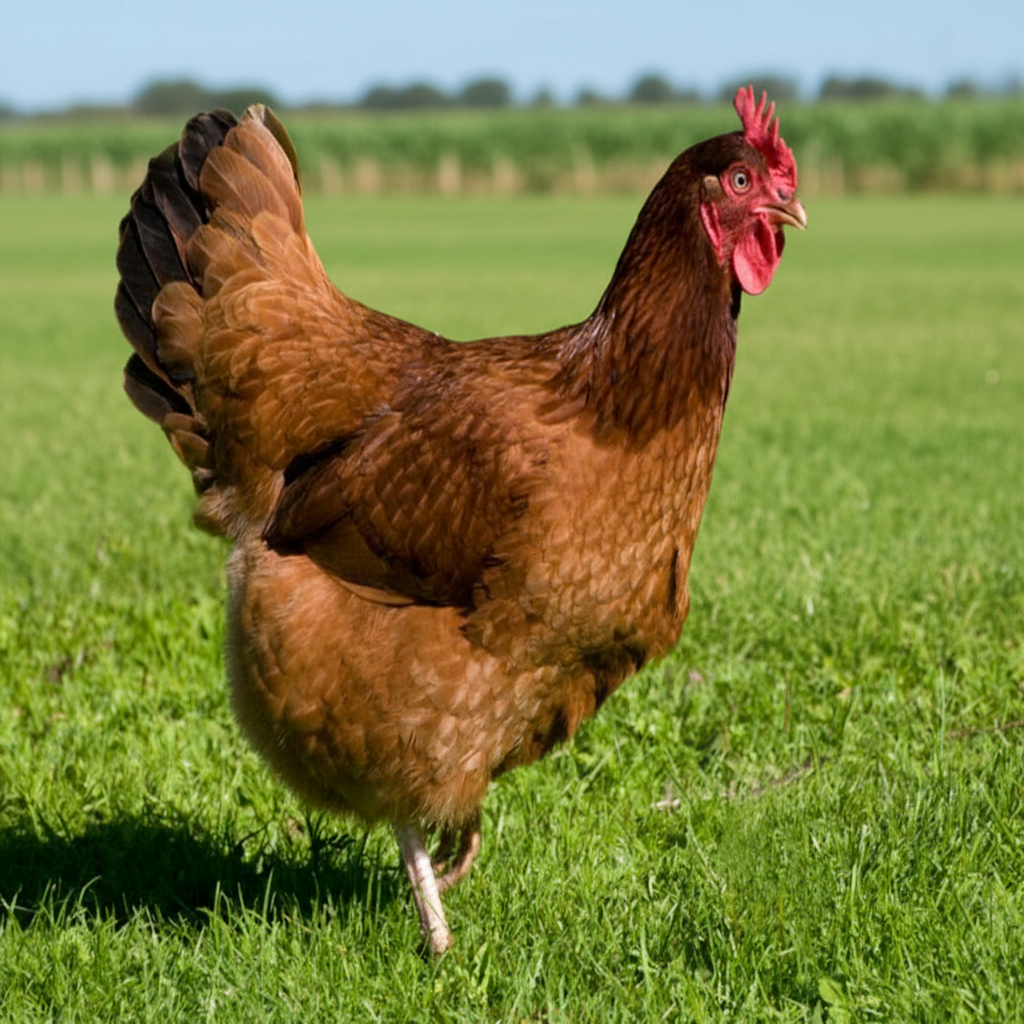
Rhode Island Red
Also known as RIR
Also known as: RIR
Is the Rhode Island Red right for you? Take the Breed Matcher →About the Rhode Island Red
The Rhode Island Red is one of the most popular backyard breeds in the world. Developed in Rhode Island in the late 1800s, these mahogany-red birds are tough, productive, and adaptable to almost any climate.
History
Rhode Island Reds were developed in the late 19th century in Rhode Island and Massachusetts. They were bred from a mix of birds, including the Red Malày and other local breeds. This breed quickly gained popularity for both meat and egg production, spreading across the United States and beyond.
Care tips
Provide a basic coop with good ventilation. Will tolerate confinement but loves to free range.
Color varieties
Fun facts
- RIRs were recognized by the American Poultry Association in 1904.
- They can adapt well to confinement but prefer free-ranging.
- Rhode Island Reds are known for their hardiness and longevity.
- They historically played a key role in the commercial poultry industry.
Living with Rhode Island Reds
Rhode Island Reds were developed on farms in Rhode Island and Massachusetts in the 1800s, with Malay and other Asian blood mixed into local stock. They became one of the most important American breeds and are the state bird of Rhode Island. They are known as hardy, productive birds that rarely give trouble.
In the backyard, RIRs are confident and busy. Hens are usually friendly enough to approach you for treats, but many are not big fans of being held. They are often near the top of the pecking order and can be bossy with gentle breeds. Roosters have a reputation for being protective, sometimes aggressive with people. If you plan to keep a male, raise him with handling and pick the calmest one you can.
Production Reds vs heritage Reds
This is the big thing to know. Most hatchery RIRs are production strains. They are lighter, lighter red, and lay a lot of brown eggs. Heritage RIRs, bred to the old standard, are darker mahogany, bigger and blockier, and lay fewer eggs but are a better dual-purpose bird. Both are called Rhode Island Reds. Ask which one you are buying.
Laying pattern
Production Reds lay very well in their first two years and often keep going through much of the winter. They start around five to six months. The molt shuts things down for a few weeks. They are not very broody, so you rarely lose laying time to sitting. Heritage birds lay steadily but less, and some go broody.
Space and climate
Standard large fowl space is fine. They are good foragers and enjoy free range time, but they also handle a run without much fuss. RIRs are tough in both cold and heat, which is one reason they are kept almost everywhere. In very cold winters, watch the roosters' single combs for frostbite, or choose the rose comb variety. They are a regular on lists of the best egg-laying breeds.
How they compare
The Leghorn vs Rhode Island Red comparison shows how a white egg specialist stacks up against the RIR. The Buff Orpington vs Rhode Island Red comparison is useful if you are choosing between gentleness and production. The New Hampshire Red was developed from RIRs and is lighter in color and quicker to mature.
Rhode Island Reds in hybrids
RIR roosters are one of the main parents of red sex link hybrids. Crossed with certain silver or white hens, they produce chicks that can be sexed by color at hatch. That is why many commercial brown egg layers carry RIR genes.
Where to get them
Production Reds are sold everywhere, from big hatcheries to farm stores. Heritage Reds take more searching. Look for breeders who show at poultry shows or belong to the breed club. Bantam RIRs are also widely available.
Common questions about Rhode Island Reds
Are Rhode Island Reds aggressive?
Hens can be bossy with other chickens. Roosters are more likely than some breeds to challenge people, but plenty are fine.
How many eggs does a Rhode Island Red lay?
Production strains are excellent layers, often laying most days in their first year. Heritage strains lay less.
Can Rhode Island Reds handle hot weather?
Yes, better than many heavy breeds. Give them shade, airflow and plenty of water on hot days.
