

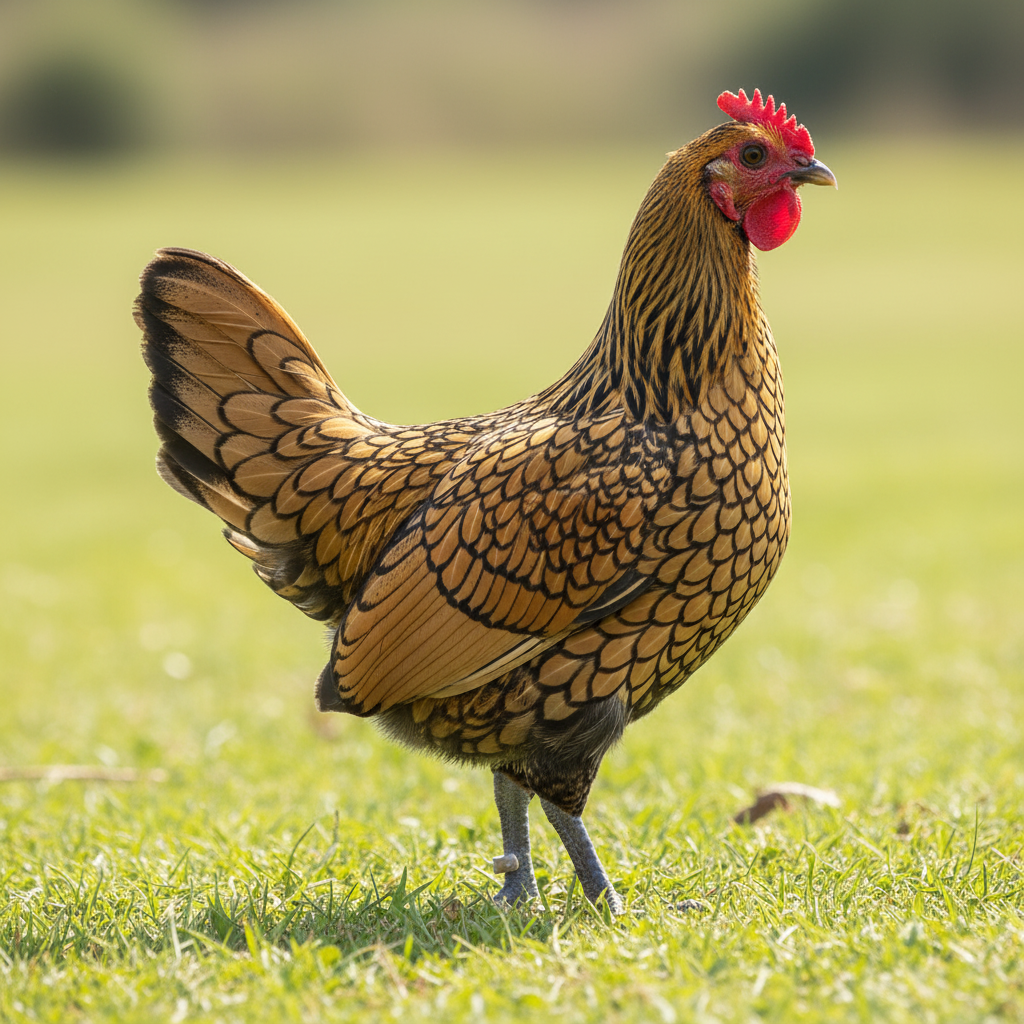
Sebright
True bantam with laced feathers and hen-feathered males.
Is the Sebright right for you? Take the Breed Matcher →About the Sebright
Sebrights are small, ornamental bantams known for their striking laced feathers, which are especially pronounced in the hen. Males are uniquely hen-feathered, lacking the typical long tail feathers seen in other breeds. They are friendly and curious, making them great pets for backyard keepers. Their compact size and charming appearance make them a favorite among poultry enthusiasts.
History
The Sebright breed was developed in England in the early 19th century by Sir John Sebright. Primarily bred for exhibition, it quickly gained popularity in poultry shows across Europe. The breed is recognized as one of the first true bantams, helping to pave the way for further bantam development.
Care tips
Sebrights are not particularly hardy and prefer a sheltered environment to protect them from extreme weather. They can be broody, making them suitable for hatching eggs if desired. Due to their small size, they require minimal space but should be kept in a secure coop to avoid predators. Regular handling helps to socialize them and prevent any skittish behavior.
Color varieties
Fun facts
- Sebrights come in both gold and silver laced varieties.
- They are one of the oldest bantam breeds recognized by poultry associations.
- Males have a distinct appearance due to their absence of long tail feathers.
- Sebrights are often used in poultry shows due to their unique feather patterns.
What keeping Sebrights is really like
The Sebright is a true bantam created in the early 1800s by Sir John Sebright in England. It is one of the oldest British bantam breeds made to a plan. Sebrights are known for their lacing. Each feather is gold or silver with a neat black edge. They have rose combs, and the roosters are hen-feathered, meaning they lack the long, pointed neck and tail feathers most roosters have.
Day to day
Sebrights are small, quick and active. Many are flighty, and they fly well, so a covered run is a must. Some become tame with regular handling. They need little space and suit small yards.
Laying
Hens lay small white or cream eggs at a modest pace. They are kept for looks, not production. They are not known as strong broodies.
Health notes
Sebrights are often said to be more prone to Marek's disease than many breeds. Buying vaccinated chicks is a good idea. Their small size also makes them more sensitive to cold, damp and drafts.
Climate
The rose comb resists frostbite. Still, give them a dry, draft-free coop in winter, since small bodies lose heat quickly. They handle heat with shade.
How they compare
The Rosecomb Bantam is another old British true bantam with a rose comb. The Nankin is often said to be part of the Sebright's background and is a calmer bird.
Where to get them
Many US hatcheries sell gold and silver Sebrights. Show birds with crisp lacing come from breeders.
Who they suit
Sebrights suit people who want small, pretty birds for a covered pen or for showing.
Common questions about Sebrights
Why do Sebright roosters look like hens?
They are hen-feathered, meaning they lack typical long rooster feathers.
Are Sebrights good layers?
No. They lay small eggs at a modest rate.
Can Sebrights fly?
Yes, quite well. A covered run is a good idea.
