

About the Shamo
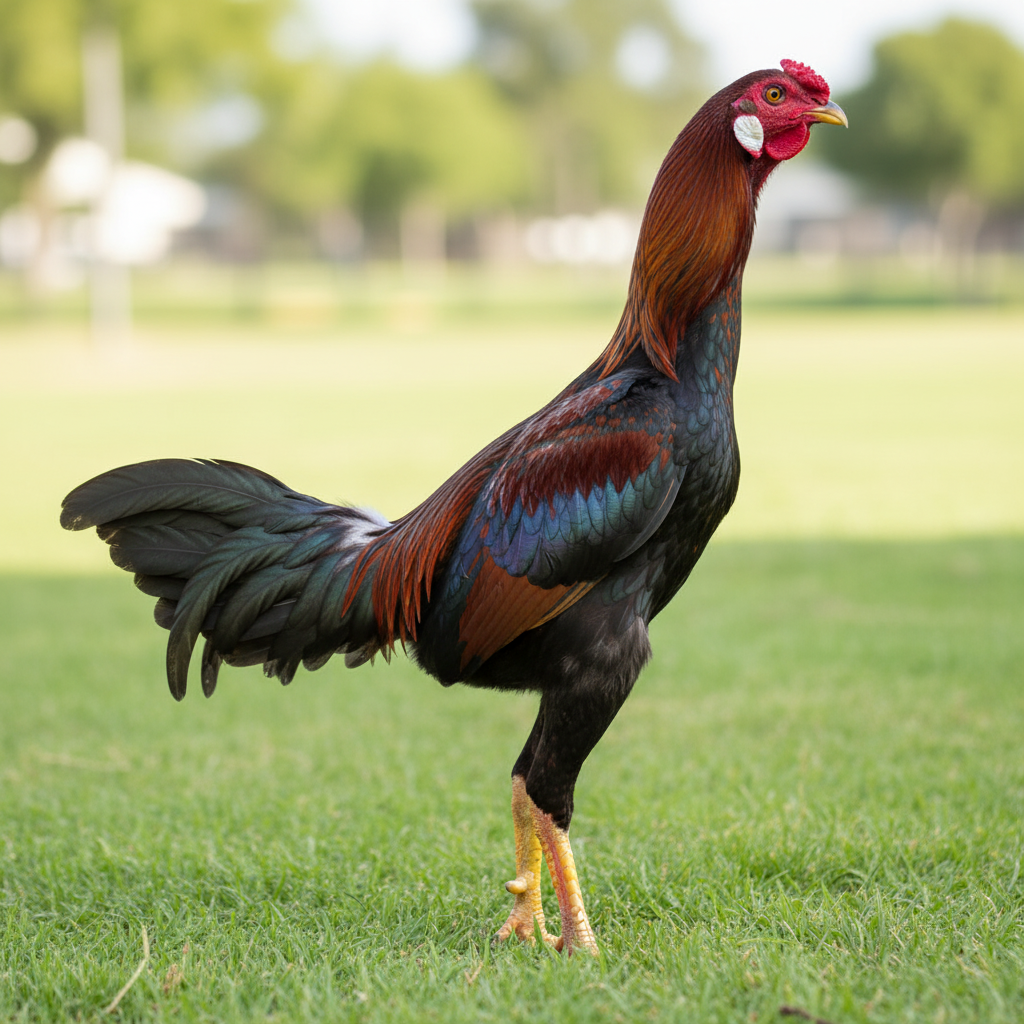
Shamo chickens are known for their impressive height and upright posture, giving them a regal appearance. Their bodies are muscular and compact, typically displaying a range of vibrant plumage colors. These birds possess a calm demeanor, yet exhibit a protective nature, making them excellent guardians of the flock. Their distinctive long legs and broad shoulders contribute to their exceptional presence.
History
The Shamo breed originated in Japan, where they were specifically developed for cockfighting and meat production. Believed to have been introduced from Thailand centuries ago, they have since evolved into an admired breed in various parts of Asia. Their popularity spread further due to their aesthetic appeal and resilience.
Care tips
Shamos thrive in spacious environments due to their large size and active disposition. They have moderate hardiness and can adapt well to different climates, but should be protected from extreme weather. Regular socialization is essential, and they may exhibit broodiness, making them good candidates for hatching eggs.
Color varieties
Fun facts
- Shamos can stand over 2 feet tall, making them one of the tallest chicken breeds.
- Their unique stance and gait give them an intimidating presence in the yard.
- The breed is known for its resistance to disease and hardiness.
- Shamos have a long history as game birds, prized in traditional Japanese culture.
What keeping Shamo is really like
The Shamo is a Japanese game breed, developed from birds brought to Japan from Southeast Asia. It is tall, upright and heavily muscled, with hard, tight feathers, a small pea or walnut comb and a fierce expression. The Shamo is protected as a Natural Monument in Japan. Several sizes exist, from large O-Shamo to the smaller Chu-Shamo and bantam forms.
A true game bird
Shamo were bred for fighting, and the instinct is strong. Roosters will fight each other, often seriously, and should be kept apart. Hens can be aggressive with other hens too. Many Shamo are calm with their keepers if handled young, but this is not a breed to mix casually into a backyard flock.
Space and housing
They are tall birds and need high coop ceilings and pop doors. Keep roosts at a sensible height to protect their legs. Their tight feathering does not insulate as well as fluffy breeds, so a dry, draft-free coop matters in winter. They handle heat well.
Laying and growth
Hens are poor layers of light brown or tinted eggs. Shamo mature slowly and take a long time to fill out. Hens can go broody.
How they compare
The Malay is another tall game bird with a similar look. The Aseel is shorter and stockier and just as game.
Rarity
Shamo are uncommon in the US and mostly kept by game breeders.
Who they suit
Shamo suit experienced keepers who want a game breed for its history and type and who can house birds separately. They are not a beginner breed or a family flock bird.
Common questions about Shamo
Are Shamo aggressive?
With other chickens, often yes, especially roosters. With people, many are calm.
Are Shamo good layers?
No. They lay few eggs.
Can Shamo live with other chickens?
It is risky. Many keepers house them separately.
