

Whiting True Blue
Most prolific blue-egg layer ever bred.
Is the Whiting True Blue right for you? Take the Breed Matcher →About the Whiting True Blue
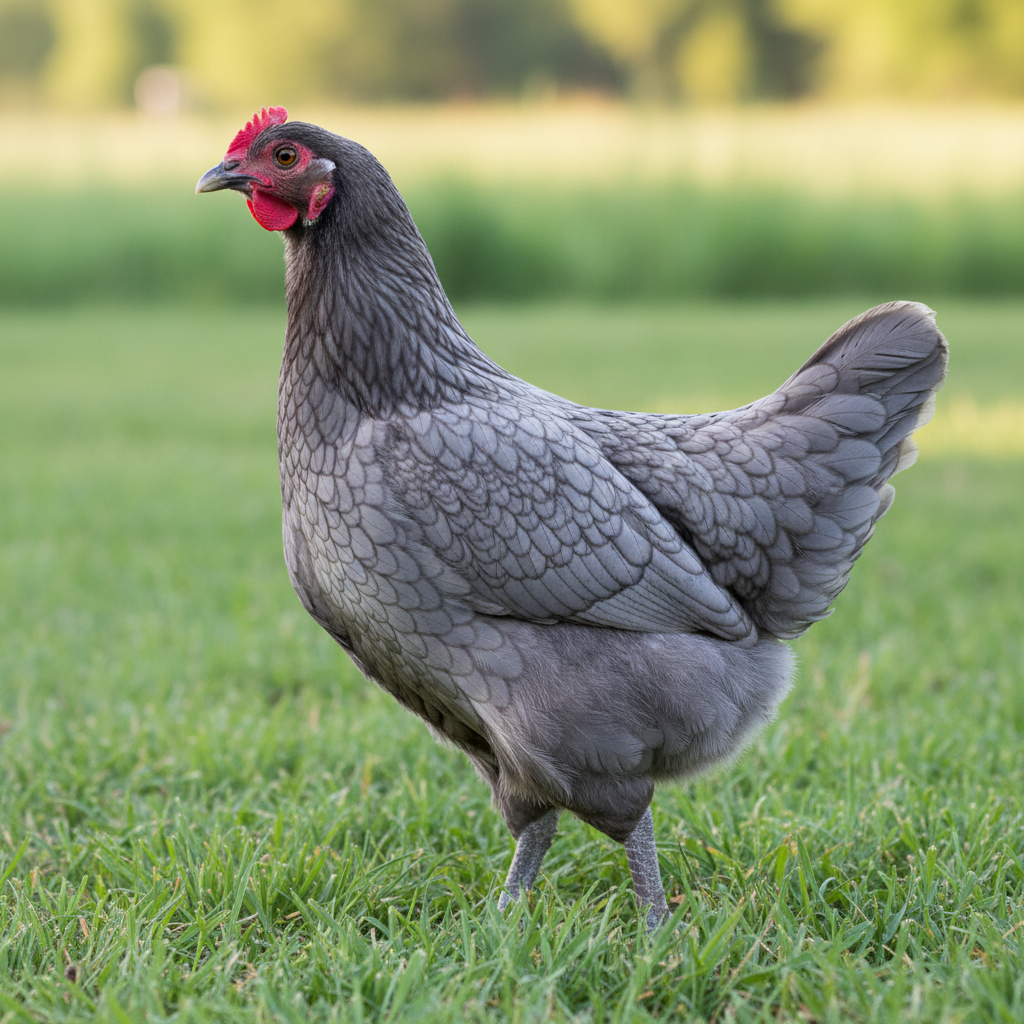
The Whiting True Blue chicken boasts a striking appearance with its blue-gray plumage and white earlobes. They are medium-sized birds known for their calm and friendly demeanor, making them suitable for backyard settings. This breed is especially noteworthy for being one of the most prolific blue-egg layers, often producing large quantities of eggs. Their unique blue eggs are a standout feature that delights many egg enthusiasts.
History
Developed in the United States by Dr. Tom Whiting, the Whiting True Blue was specifically bred for high egg production. It emerged in the early 2000s as a hybrid designed to lay blue eggs, quickly gaining popularity among backyard keepers. Its impressive laying capabilities have contributed to its spread across various poultry communities.
Care tips
Whiting True Blues are hardy and adapt well to different environments, but they thrive in spacious coops with plenty of room to roam. They are not known for being broody, so keepers can expect consistent egg production. Regular health checks and a balanced diet are essential to maintain their output and overall well-being.
Color varieties
Fun facts
- Whiting True Blues can lay up to 300 blue eggs per year.
- Their blue eggs are a result of a specific gene known as the ‘blue egg gene’.
- They were bred from a combination of several heritage breeds for optimal laying.
- These chickens are friendly and social, often getting along well with other breeds.
What makes the Whiting True Blue different
The Whiting True Blue is a blue egg layer developed by Dr. Tom Whiting of Whiting Farms in Colorado, a company better known for raising roosters for fly tying feathers. It is a selected strain rather than a recognized breed, and it was bred with the goal of reliable blue eggs from a productive, sturdy hen. A sister line, the Whiting True Green, lays green eggs.
Looks and temperament
Since there is no breed standard, Whiting True Blues vary in color, and many look a bit like Easter Eggers. Keepers usually describe them as active and alert, sometimes a little flighty, but not wild. They forage well.
Eggs and laying
The selling point is the shell color. They lay blue eggs, and they are said to lay well for a blue egg bird. As with all blue egg layers, the blue goes all the way through the shell, unlike brown eggs, which are colored on the surface. Expect the usual slowdown in winter and during the molt.
Climate
They are sturdy, medium-sized birds that handle normal backyard winters and summers. If your birds have larger single combs, protect them from frostbite in deep cold with a dry, well ventilated coop. Give shade in hot weather.
How they compare
An Easter Egger might lay blue, green or even tinted eggs, while the True Blue is selected to lay blue. The Ameraucana is a recognized breed that lays blue eggs and has a show standard with beards and muffs. See blue egg layers for other options.
Where to get them
They are sold through some US hatcheries under the Whiting name.
Common questions about Whiting True Blues
Is the Whiting True Blue a breed?
No. It is a selected strain without a breed standard.
Do Whiting True Blues always lay blue eggs?
They are bred for it, and most do. Shade can vary from hen to hen.
Are Whiting True Blues cold-hardy?
They handle cold well in a dry, draft-free coop. Watch any bird with a big comb in hard freezes.
