

Anemia (Pale Comb)
Pale comb is a symptom, not a disease. Common drivers are heavy mites or lice (anemia from blood loss), internal worms, broody hens losing condition, or chronic disease.
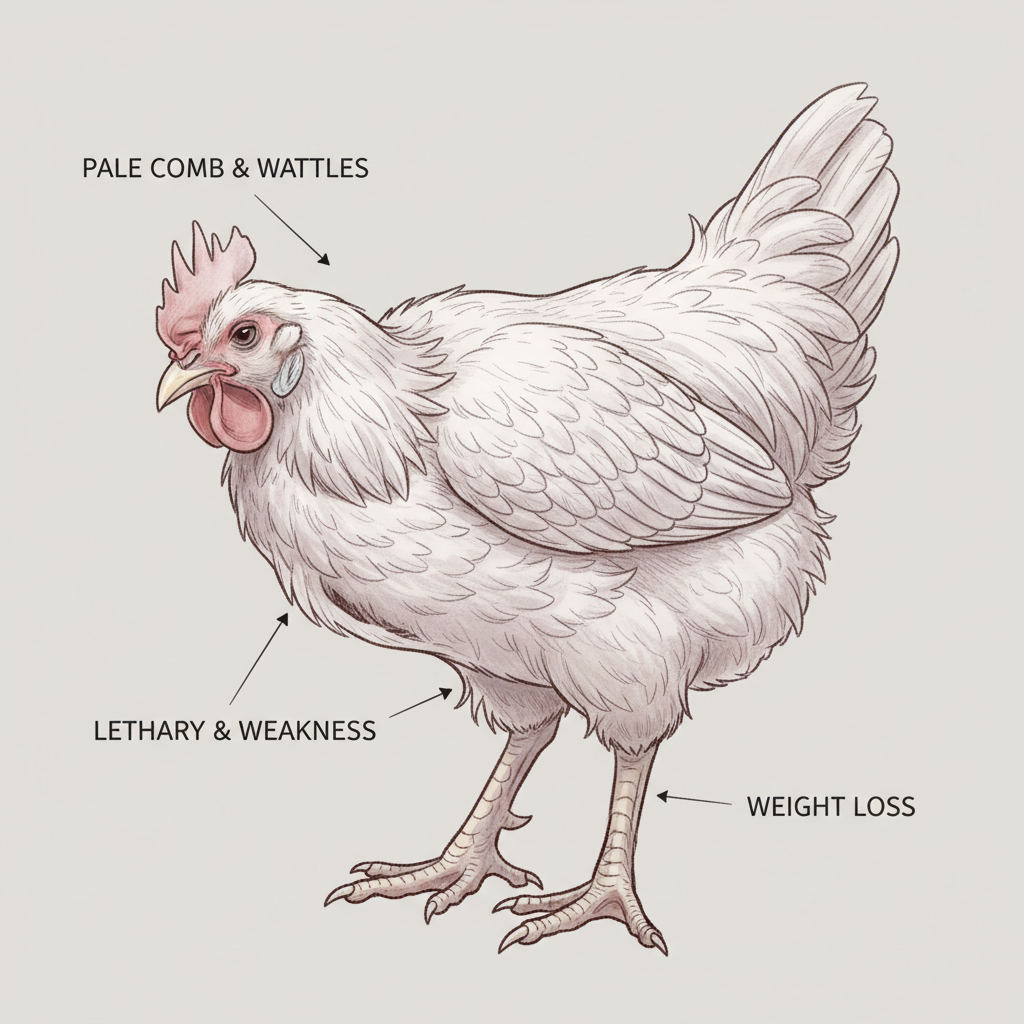
Mix of AI illustrations and anonymized real cases shared by community keepers. Visual severity varies by bird, age, and stage.
Symptoms
- Pale comb
- Pale wattles
- Lethargic / not moving
- Weight loss
- Weakness
Treatment
Find the root cause. Check under feathers for mites and lice and treat with permethrin. Run a fecal float for worms. Boost iron rich foods (cooked liver, leafy greens) and add a poultry vitamin supplement to water. If the bird does not respond in a week, see a vet.
Prevention
Regular mite checks, monthly dust bath access, fecal exams once or twice a year, and a balanced layer ration solve most chronic anemia.
What to do when you suspect anemia
Anemia means a chicken does not have enough red blood cells. You see it as a pale comb and wattles, pale skin around the eyes, weakness, and sometimes a bird that tires easily or breathes faster after moving. Anemia is a sign, not a disease on its own, so the real job is finding the cause.
Step by step
- Separate the bird somewhere quiet and warm. Anemic birds handle stress poorly.
- Go out at night with a flashlight. Check the ends and undersides of roost bars and cracks in the wood for red mites. They hide by day and feed at night.
- Part the feathers around the vent and under the wings. Look for northern fowl mites and lice, and for gray, crusty patches of mite debris.
- Look at fresh droppings. Blood, or worms you can see, are important clues.
- Check for wounds you might have missed, including under the wings and around the vent.
- Feel the keel bone. A sharp keel means weight loss.
Common causes
- Blood-feeding mites, especially red mites and northern fowl mites. See external mites and lice.
- Coccidiosis, which damages the gut and causes blood loss, mostly in younger birds.
- Heavy worm loads, covered under internal worms.
- Bleeding from a wound, a peck injury or a broken blood feather.
- Chronic disease, including tumors from Marek's or leukosis in older birds.
How to tell this apart from a normal pale comb
Hens that are not laying, including molting, broody and winter-break hens, often have paler, smaller combs. If she is bright, eating well and has a normal weight, that is probably what you are seeing. The pale comb page covers that difference. Anemia comes with other signs like weakness, pale eyelids, weight loss or parasites.
When to call a vet
Call an avian or poultry vet if she is weak, will not eat, collapses, or does not improve after you treat for parasites. A vet can check a blood sample and do a fecal test for worms and coccidia. If several birds are losing condition or dying, a necropsy at your state diagnostic lab is the best way to find the cause.
Supportive care
Keep her warm, quiet and away from flock mates who might bully her. Offer good layer feed, a little extra protein and clean water. Poultry vitamins and electrolytes can support her while you deal with the cause, but they do not fix anemia on their own.
Prevention
Check birds and roosts for mites every week or two. Keep bedding dry. Quarantine new birds for about a month and check them for parasites before they join the flock.
The flock and the eggs
If mites or worms are the cause, treat the whole flock and the coop, not just one bird. If you use any dewormer or mite product, check the product label or ask a vet about the egg withdrawal period.
Common questions about anemia in chickens
What does an anemic chicken look like?
Pale comb, wattles and face skin, weakness and often weight loss.
Can mites really cause anemia?
Yes. Heavy infestations of blood-feeding mites can make birds seriously anemic, especially chicks and broody hens.
Will iron supplements help my chicken?
Do not give supplements without a vet's advice. Fixing the cause, like parasites, matters most.
