

Cannibalism and Feather Pecking
Once chickens see blood they will not stop. Triggers include overcrowding, boredom, protein deficiency, or a sick bird singled out by the flock. Isolate any bleeding bird immediately.
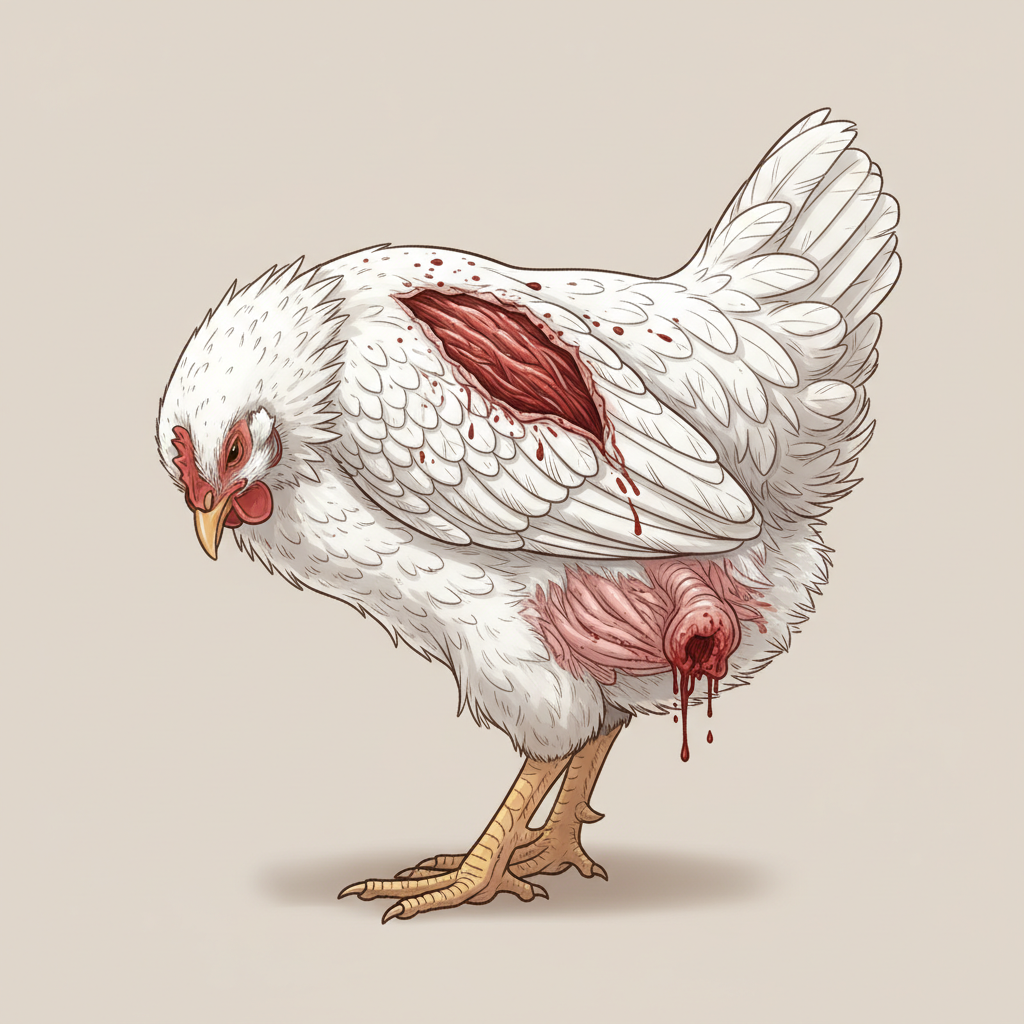
Mix of AI illustrations and anonymized real cases shared by community keepers. Visual severity varies by bird, age, and stage.
Symptoms
- Bleeding wound
- Bare patches from pecking
- Bullied / hiding
- Bleeding vent
- Weight loss
Treatment
Isolate the injured bird. Clean wounds with saline, dab with blue kote or anti pick spray. Do not return until healed. For the rest of the flock, add space, distractions (cabbage on a string, perches), and check protein levels (should be at least 16 percent layer feed).
Prevention
Give 4 square feet of coop and 10 square feet of run per adult bird. Provide multiple feeders and waterers. Add perches and dust baths. Avoid red bulbs in winter (red looks like blood). Trim sharp beak tips only when other fixes fail.
Stopping feather pecking before it turns bloody
Chickens peck. It is how they explore and sort out who is in charge. The problem starts when pecking turns into pulling feathers, picking at skin, or attacking a wound. Chickens are drawn to red, so once there is blood, it can become cannibalism quickly. Acting early is the whole game.
What to do the moment you see blood
- Remove the injured bird right away. Do not wait to see if it settles down.
- Rinse the wound with saline or clean water and look at how deep it is.
- Apply an animal wound spray. Colored sprays help hide the red that draws pecking.
- Keep her apart until the wound is fully healed and covered with feathers or a dry scab.
- Watch the flock for the bird or birds doing the pecking.
Common causes
- Crowding. Too many birds in too little space is the number one driver.
- Boredom. Nothing to scratch, forage or dust bathe in.
- Low protein. Birds may pull and eat feathers when protein is short.
- Heat and bright light. Hot, brightly lit coops make birds more irritable.
- A visible wound or prolapse that draws attention.
- Mixing birds of different sizes or adding new birds too fast.
How to tell this apart from other feather loss
Pecking damage looks like broken feathers and bare patches on the back, tail or vent, often on lower ranking birds. Even feather loss with pin feathers coming in is molt. Bare backs in hens kept with a rooster are mating wear. Dirty-looking vent feathers with crawling specks are mites. The feather loss page helps sort these out. If the pecking is aimed at a red, swollen vent, check for vent prolapse.
When to call a vet
Call an avian or poultry vet for deep wounds, wounds near the vent or eyes, bleeding that will not stop, or a bird in shock who is limp and cold. Pecking injuries can get infected even when they look small.
Fixing the flock
- Give more space, or reduce bird numbers. The coop size per bird guide gives rough targets.
- Add things to do, like a dust bath area, hanging greens, piles of leaves or scattered scratch.
- Feed a complete feed with enough protein, and keep treats low.
- Use dimmer light inside the coop if birds spend time there during the day.
- If one bird is the ringleader, separating her for a few days can reset her place in the pecking order.
Eggs
Egg eating often travels with pecking problems. Collect eggs often, keep nests dark, and fix soft shells. If a bird needs medication for a wound, check the product label or ask a vet about eggs.
Common questions about feather pecking and cannibalism
Why are my chickens pecking each other bloody?
Crowding, boredom, low protein and the sight of blood are the most common reasons.
When can an injured hen go back to the flock?
Once the wound is fully healed and no longer red. Reintroduce her slowly.
Does a red light stop pecking?
Red light makes blood less visible and can reduce pecking indoors, but it does not fix the underlying cause.
