

Egg Yolk Peritonitis
Yolk material misses the oviduct and drops into the abdomen, triggering infection. The hen develops a swollen belly and waddles. Often fatal even with treatment.
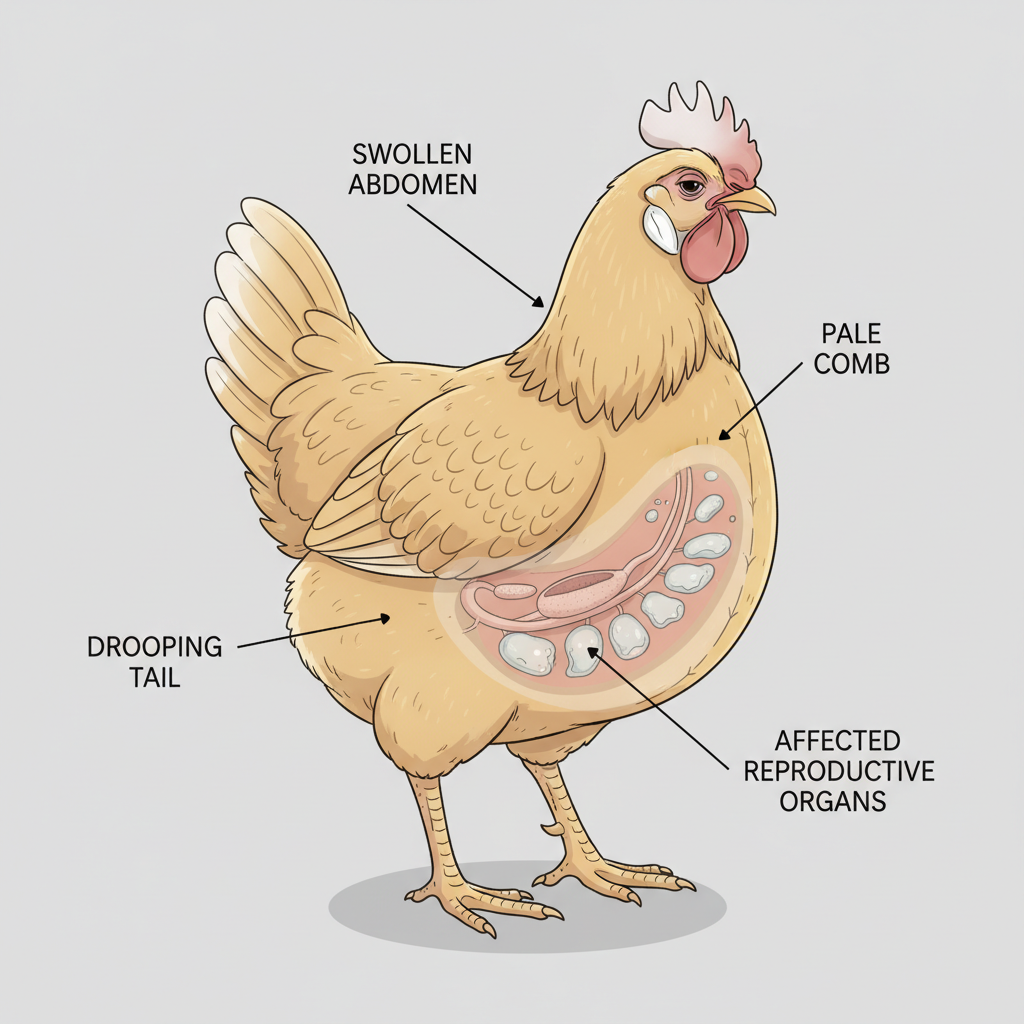
Mix of AI illustrations and anonymized real cases shared by community keepers. Visual severity varies by bird, age, and stage.
Symptoms
- Swollen or water belly
- Waddling like a duck
- Lethargic / not moving
- Not eating
- Pale comb
- Tail held down
Treatment
This needs a vet. Antibiotics, anti inflammatories, and sometimes belly drainage may buy time. Hormone implants can shut down laying in valued pets. Without veterinary care, prognosis is poor.
Prevention
Manage weight in production breeds. Avoid year round artificial lighting that pushes constant laying. Consider hormone implants in pet hens prone to reproductive disease.
What to do if you suspect egg yolk peritonitis
Egg yolk peritonitis happens when yolk ends up in the abdomen instead of moving down the oviduct. The yolk can trigger inflammation and, often, a bacterial infection. It is one of the more common serious problems in laying hens, especially high-production breeds and older layers. It is not something to treat at home on your own.
Signs to watch for
- A swollen lower belly that may feel soft, squishy or like a water balloon.
- Standing upright like a penguin, or walking with a waddle.
- Stopped laying, or laying odd eggs before stopping.
- Lethargy, sitting fluffed up, and poor appetite.
- Yellow-stained or watery droppings, and a dirty vent.
- Breathing harder than usual if fluid presses on the air sacs.
What to do right now
- Separate her somewhere warm, quiet and clean.
- Feel her abdomen gently. Note if it feels hard, soft, hot or fluid-filled.
- Check the vent for a stuck egg or prolapse.
- Offer water and easy food, and watch whether she eats.
- Call an avian or poultry vet. This is a vet problem.
How to tell this apart from look-alikes
A hard egg-shaped lump near the vent with straining is more likely egg binding. A hen that sits in the nest, flattens and growls is broody, not sick. Fluid in the belly can also come from heart or liver problems and tumors, which only a vet can sort out. A crusty, smelly vent without belly swelling points more to vent gleet.
When it is an emergency
Call the vet the same day if she is breathing hard, will not eat, or is going downhill. A vet may drain fluid, prescribe antibiotics, or talk to you about a hormone implant to stop her laying for a while. Some hens recover, but it often comes back.
Supportive care while you wait
Keep her warm and calm. Offer water, layer feed mixed with a little water, and something she likes. Do not squeeze or press on her belly. Home remedies do not cure peritonitis.
Prevention
You cannot prevent every case. Things that may help include keeping hens at a healthy weight, feeding a complete layer ration, keeping stress low, and not pushing extra laying with artificial light. Some keepers with high-production hens talk to their vet about laying control for hens that keep having problems.
The flock and the eggs
Egg yolk peritonitis is not contagious, though other hens of the same breed and age may be at similar risk. Do not eat eggs from a hen who is sick, and if she is treated, check the product label or ask a vet about the egg withdrawal period.
Common questions about egg yolk peritonitis
Can a chicken survive egg yolk peritonitis?
Some do with vet treatment, but it can be serious and often recurs.
What does a hen with peritonitis look like?
Swollen, soft belly, penguin stance, lethargy and no laying.
Is egg yolk peritonitis contagious?
No. It is a problem inside one hen, not an infection that spreads.
