

Fowl Pox
A slow spreading virus carried by mosquitoes. Dry form (scabs on comb and wattles) usually heals on its own in 3 to 4 weeks. Wet form (mouth and throat lesions) is dangerous.
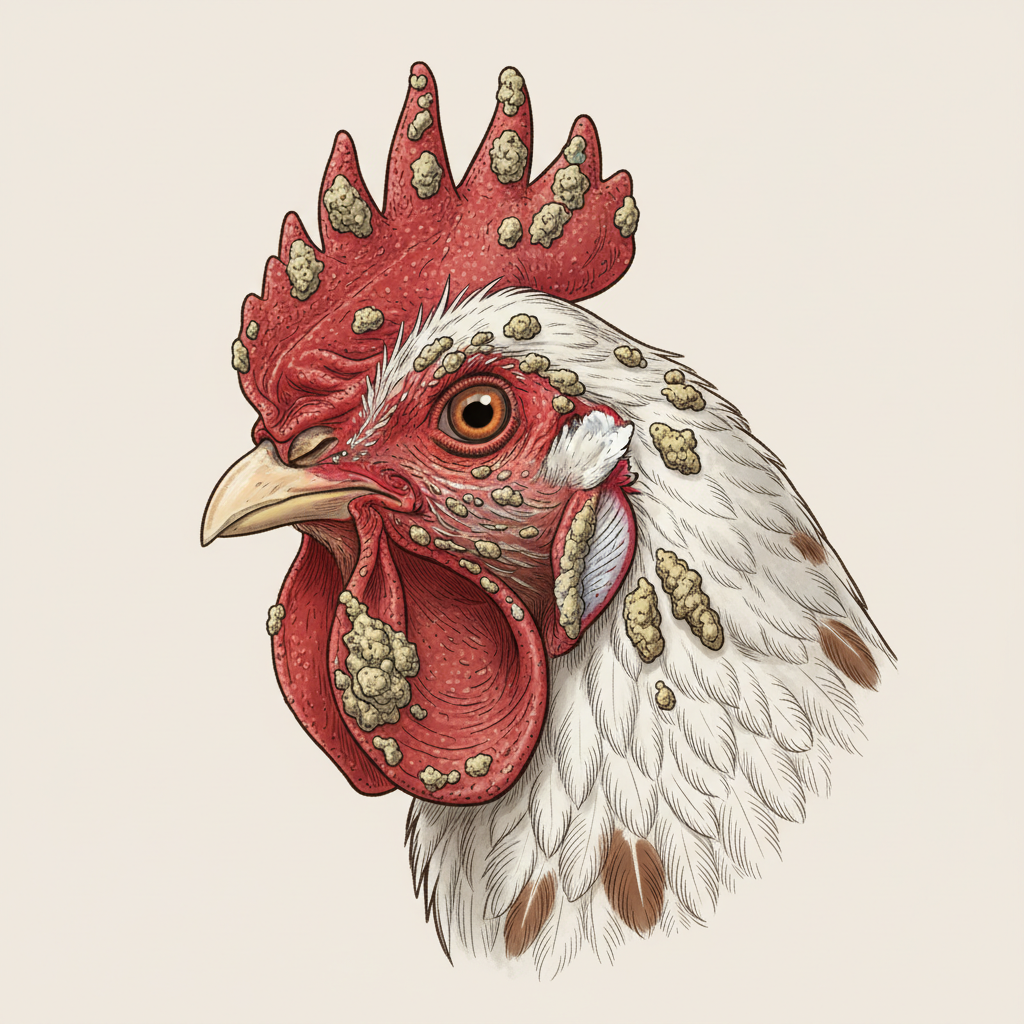
Mix of AI illustrations and anonymized real cases shared by community keepers. Visual severity varies by bird, age, and stage.
Symptoms
- Wart like scabs on comb or wattles
- Scabs on featherless skin
- Drop in egg production
- Trouble breathing (wet form)
- Yellow lesions in mouth (wet form)
Treatment
Dry form: keep birds comfortable, dab scabs with iodine, isolate to slow spread. Wet form needs vet attention, the lesions can block the airway. There is no antiviral, just supportive care plus vaccination of unaffected flockmates if an outbreak is starting.
Prevention
Mosquito control around the coop. Vaccinate in regions where pox is endemic. Quarantine new birds.
Typical recovery
14 to 28 days with prompt care.
Caring for a flock with fowl pox
Fowl pox is a slow-spreading virus. It mostly travels by mosquitoes, so cases tend to show up in warm, wet months. It can also spread through cuts and contact with scabs. There are two forms. Dry pox causes wart-like scabs on the comb, wattles and face. Wet pox causes yellowish patches in the mouth, throat and windpipe. Dry pox is more common and usually milder. Wet pox is more dangerous because it can block breathing and eating.
What to do right now
- Separate birds with obvious scabs or mouth sores if you can, especially from unaffected birds.
- Look inside the mouth of any affected bird with a flashlight. Yellow, cheesy patches mean wet pox.
- Make sure every sick bird is eating and drinking. Soft, wet feed is easier for birds with mouth lesions.
- Leave the scabs alone. Picking them invites infection.
- Cut down mosquito breeding areas around the coop.
How to tell this apart from look-alikes
Dry pox scabs look like dark, warty bumps, often on the comb. Peck wounds and frostbite can look similar, but frostbite shows up after cold snaps and turns tips black, while peck wounds are fresh and linear. Yellow patches in the throat can look like a fungal infection, and gasping with bloody mucus is more like ILT. Sores near the eye with swelling can also fit respiratory infections covered on the swollen eye page.
When to call a vet
Call an avian or poultry vet if a bird is struggling to breathe, cannot eat because of mouth lesions, or if many birds are affected. A vet can confirm it and sometimes gently remove lesions blocking the airway. Do not try to scrape lesions out of a bird's throat yourself.
Supportive care
There is no cure that kills the virus once a bird has it. Most birds with dry pox recover in a few weeks. Supportive care helps them through it. Keep them in a clean, calm space with easy access to water and soft food. A gentle antiseptic on scabs can help prevent secondary infection, but it does not cure pox.
Prevention
- Vaccines are available for fowl pox. Ask a vet or hatchery whether it makes sense for your area.
- Reduce mosquitoes by draining standing water and keeping grass trimmed around the run.
- Quarantine new birds and check them for scabs before mixing.
The flock, eggs and people
Birds that recover are usually immune to that virus. Fowl pox does not infect people. It can slow down laying while birds are sick. Eggs from a recovering hen are fine to eat if she is eating and acting normal, and if she has been treated with anything, check the product label or ask a vet. See the disease encyclopedia for other conditions that cause scabs or lesions.
Common questions about fowl pox
Is fowl pox contagious to humans?
No. It only affects birds.
How long does fowl pox last in chickens?
Dry pox usually runs its course in a few weeks. Wet pox can take longer and is more serious.
Can chickens recover from fowl pox?
Most birds with dry pox recover and become immune. Wet pox has a higher death rate.
