

Scaly Leg Mites
Tiny mites burrow under leg scales and raise them up, leaving crusty white or yellow buildup. The legs look thick and lumpy. Treatable but uncomfortable.
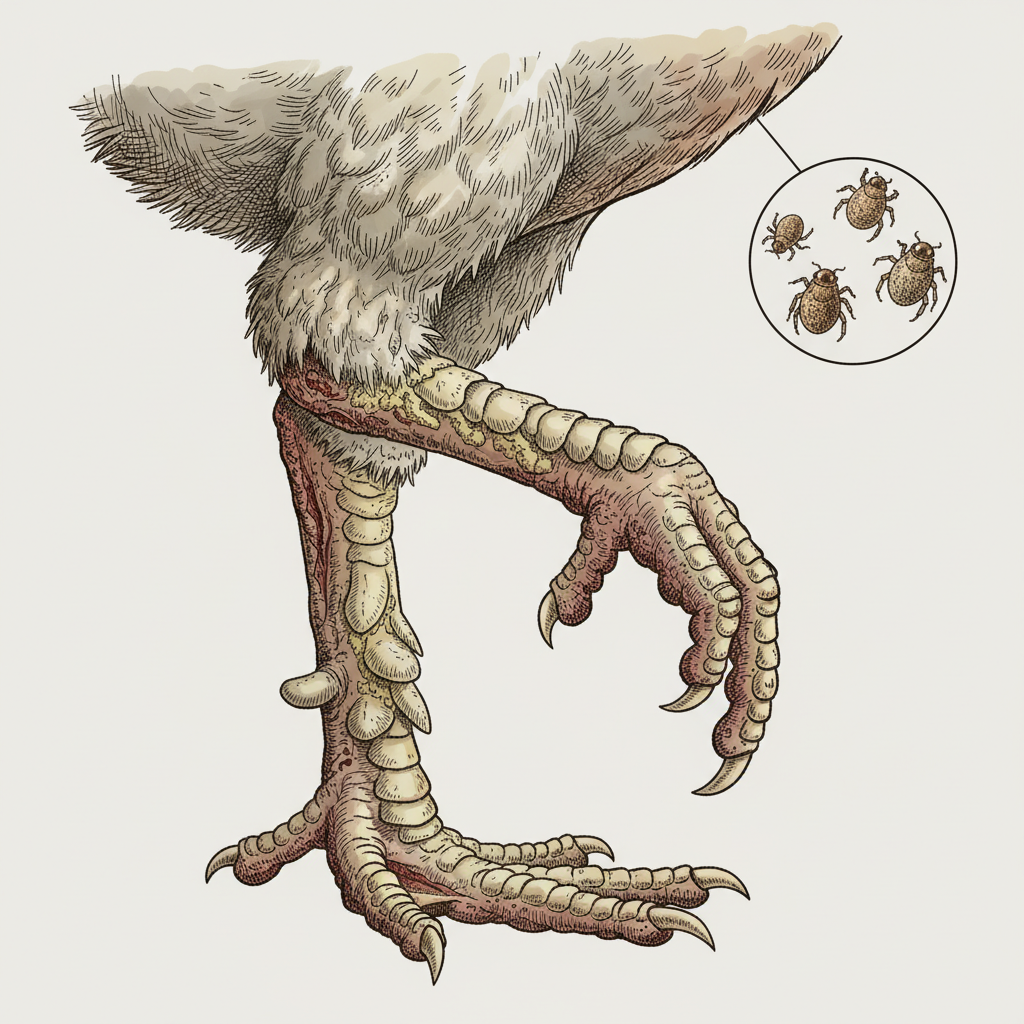
Mix of AI illustrations and anonymized real cases shared by community keepers. Visual severity varies by bird, age, and stage.
Symptoms
- Raised crusty scales on legs
- Thickened or deformed legs
- Limping / leg weakness
- Restless behavior
Treatment
Soak legs in warm soapy water to soften crusts, then coat in petroleum jelly or castor oil daily for 2 weeks. The oil suffocates the mites. Treat all birds in the flock since mites spread.
Prevention
Inspect legs monthly. Provide a dust bath with diatomaceous earth or wood ash. Clean roosts and the coop floor regularly.
Typical recovery
14 to 28 days with prompt care.
Getting rid of scaly leg mites for good
Scaly leg mites burrow under the scales of the legs and feet and live their whole lives there. As they feed, they push the scales up and leave crusty debris behind. The legs end up looking thick, rough and lumpy. It does not happen overnight, which is why it is easy to miss until it is fairly advanced. Older birds are often worse simply because they have had longer to build up a load.
How to spot it
- Scales that stand up instead of lying flat and smooth.
- White or gray crusty material under and between scales.
- Legs that look thicker than normal.
- In bad cases, limping, swollen toes, or bleeding where scales have come loose.
A plan that works
- Check the legs of every bird, not just the one you noticed. Mites spread along shared roosts.
- Gently clean the legs with warm, soapy water and a soft brush. Do not pry off scales.
- Dry the legs well.
- Coat legs and feet with petroleum jelly or a plant-based oil to smother the mites. Repeat every few days for several weeks. This is slow, and stopping early is why it comes back.
- If the infestation is bad, ask a vet about a treatment labeled for poultry, and follow the label exactly.
- Clean the coop. Strip bedding, scrub roosts, and treat or replace rough, cracked wood.
Patience with the scales
Killing the mites does not make the legs look normal right away. The damaged scales stay rough until they shed and new ones grow, which can take months and often happens with a molt. Judge progress by whether the crusting stops getting worse, not by how pretty the legs look.
How to tell this apart from look-alikes
Older birds get naturally thicker scales, but they still lie flat. A swelling on the bottom of the foot with a dark scab is bumblefoot. Dark, dry toe tips after a cold snap point to frostbite. Mites and lice on the body are a separate issue, covered on external mites and lice, though it is a good idea to check for them at the same time.
When to call a vet
Call an avian or poultry vet if legs are bleeding, very swollen or hot, if toes look like they are losing circulation, or if a bird cannot walk. Severe cases can lead to infection and the loss of toes.
Prevention
- Check legs when you do your regular health checks.
- Look at new birds' legs closely before you buy, and quarantine them for about a month.
- Use smooth, sealed roosts that are easy to clean.
- Replace bedding regularly.
Eggs and the rest of the flock
Scaly leg mites do not affect egg safety, and petroleum jelly on the legs is not a problem for eating eggs. If you use any insecticide or medicated product, check the product label or ask a vet about egg withdrawal. These mites do not live on people.
Common questions about scaly leg mites
Does petroleum jelly kill scaly leg mites?
It can smother them if applied often for several weeks. It is slow, and heavy cases may need a labeled product.
Are scaly leg mites contagious?
Yes, between birds, mostly through shared roosts and bedding.
Why do my old hen's legs look rough?
Aging thickens scales, but if they lift or crust, check for mites.
