

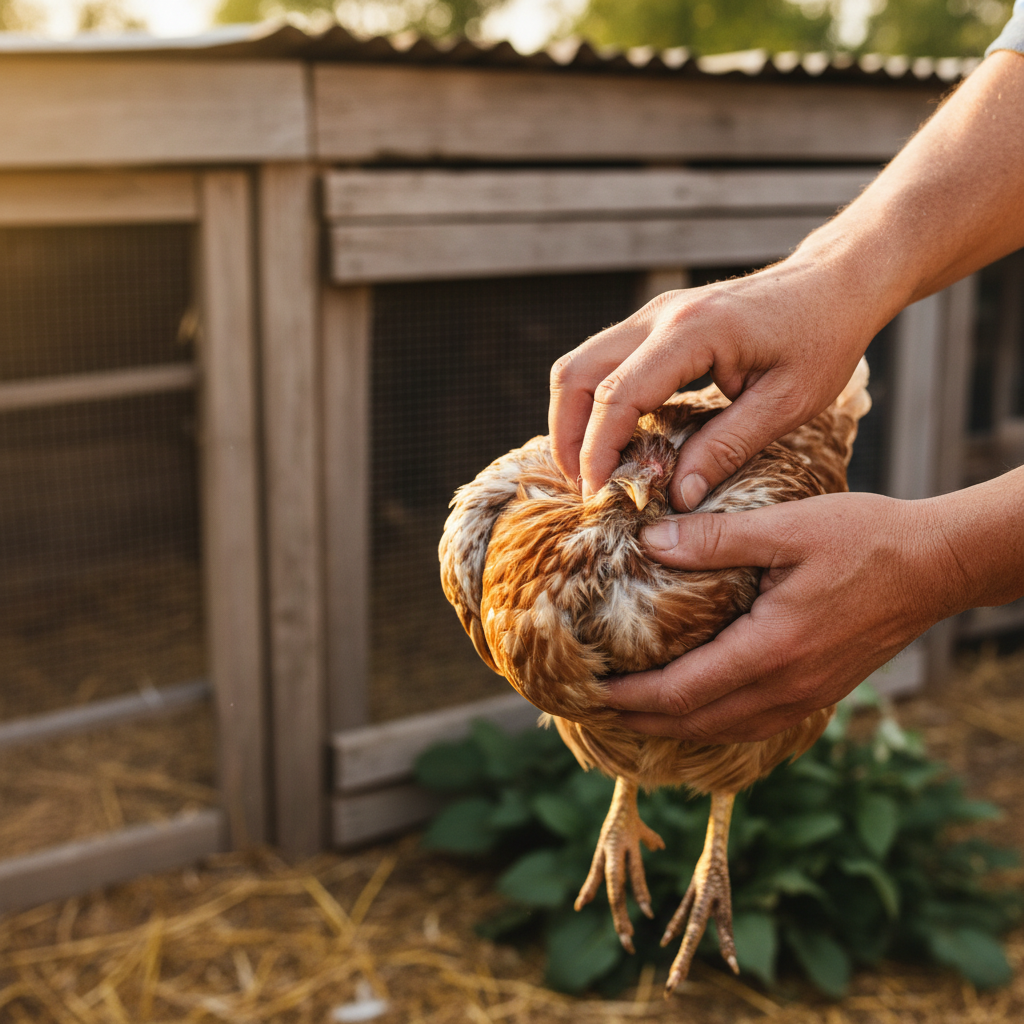
Why does my chicken have watery diarrhea?
Watery droppings can be totally normal in hot weather or after lots of greens, but persistent diarrhea points to gut infection, parasites, or kidney stress.
Diagnose your chicken in 30 seconds
Upload a photo + describe symptoms. Our AI vet returns likely causes, urgency, and home care.
Open AI Chicken DoctorMost likely causes
1. Heat, drinking more water
Hens dump excess water through droppings in hot weather. Usually clear water plus normal solid stool.
2. Too many greens or treats
Big watermelon, lettuce, or fruit binges cause loose stool for a day.
3. Coccidiosis
Watery, sometimes bloody or mucousy. Usually in young birds.
4. Worms
Persistent loose droppings with weight loss.
5. Bacterial infection (E. coli, Salmonella)
Yellow or greenish watery stool, foul smell, multiple birds.
6. Kidney issues from high protein or low water
Less common, usually with white urate buildup.
What to check first
- Heat, over 85°F today?
- Any treats, kitchen scraps, or new feed in the last 24-48 hours?
- Solid part of the dropping present, or all liquid?
- Color: brown (normal-ish), yellow, green, white?
- Is the hen eating, drinking, and active?
Home care that works
- Remove all treats and scraps for 48 hours.
- Add probiotics (plain yogurt, kefir, or commercial poultry probiotic) for 5 days.
- Offer electrolyte water alongside plain water.
- Provide shade and cool water if heat-related.
- If suspect coccidia, start Corid as in the bloody droppings guide.
Call a vet if
- Lethargy, weight loss, or refusal to eat.
- Diarrhea lasts more than 3 days.
- Multiple birds with watery, foul-smelling droppings.
- Blood or mucus visible.
Frequently asked questions
What color should chicken poop be?
Normal droppings are brown/green solid with a white urate cap. Cecal droppings (1-2x a day) are darker, looser, and more pungent, also normal.
Can I give a chicken Imodium?
No, never give human anti-diarrheals to chickens. Treat the cause (heat, diet, parasites, infection), not the symptom.
Related symptoms
Handling watery droppings without panic
Watery droppings are not always diarrhea. In hot weather, chickens drink more and pass more water. Stress and treats like watermelon do it too. True diarrhea comes with a dirty vent, a dull bird and droppings that stay loose for days.
What to do first
- Separate the bird so you can see her own droppings.
- Note color. Watery and clear, green, yellow, foamy or bloody all mean different things.
- Check the vent. Crusted or pasted feathers need gentle cleaning with warm water.
- Think about the last few days. Heat, new treats, moldy feed or a feed change?
- Make sure she is drinking. Diarrhea dehydrates birds fast.
Look-alikes
Blood or red mucus in young birds points to coccidiosis. Bright green watery droppings with a sick bird are covered under green droppings. A smelly, crusty vent with white discharge can be vent gleet. Normal cecal droppings are pasty and brown and show up once or twice a day.
When to call a vet
Call if diarrhea lasts more than two or three days, if the bird stops eating, if you see blood, or if several birds are affected. Sudden diarrhea in many birds with deaths should be reported to your state veterinarian or extension office.
Supportive care
Offer clean water and poultry electrolytes. Cut out treats and feed plain layer or starter feed. Keep her clean and dry.
People, eggs and hygiene
Chickens can carry salmonella and other germs in their droppings even when they look fine. Wash hands after handling birds, eggs or bedding. Keep birds out of the kitchen. Toss eggs that are soiled with diarrhea. If she is medicated, check the product label or ask a vet about eating eggs.
Common questions about watery chicken droppings
Is watery poop normal in summer?
Yes, a bit. Chickens drink more in heat and droppings get wetter.
What is a cecal dropping?
A pasty, smelly, brown dropping that comes from the ceca a couple of times a day. It is normal.
Can I give my chicken yogurt for diarrhea?
A little will not hurt, but it does not cure disease. Too much dairy can make diarrhea worse.
