

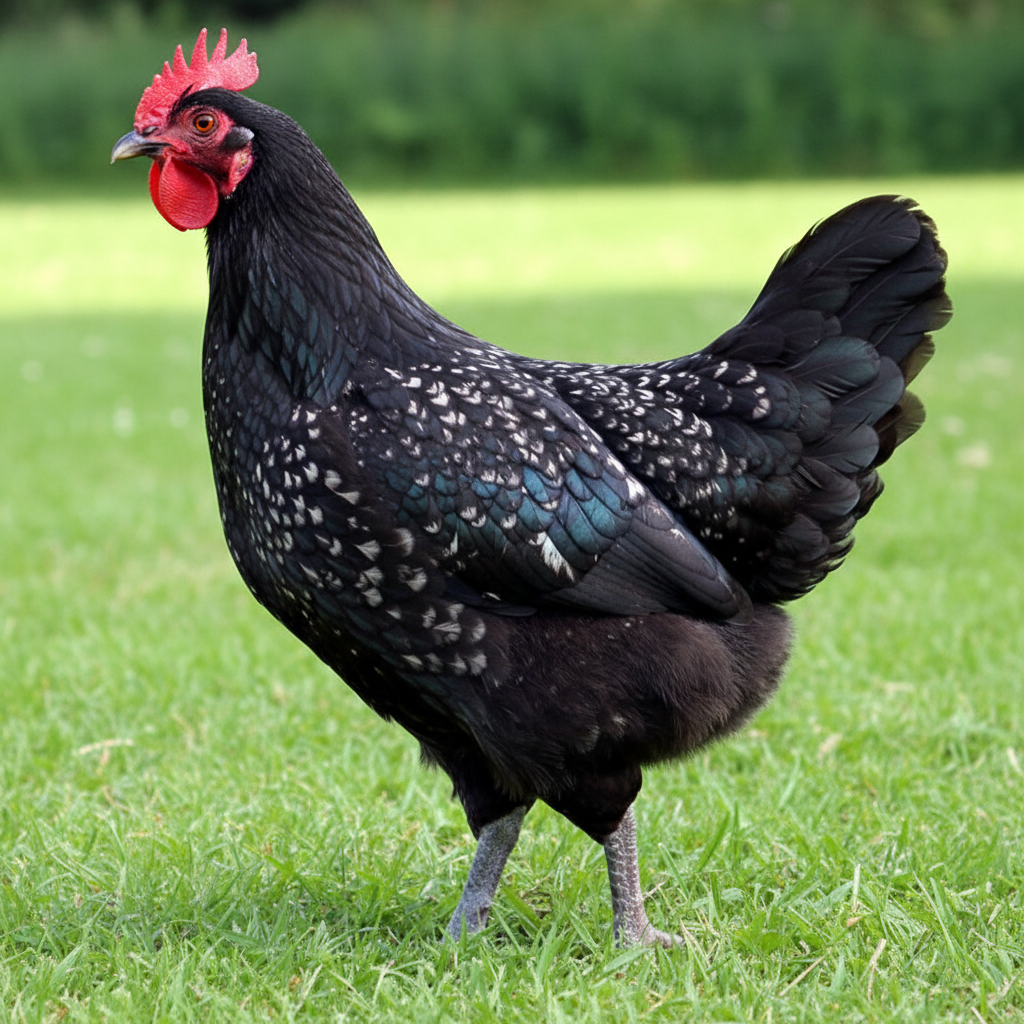
Ancona
The Ancona is a colorful, hardy breed known for its unique plumage and friendly disposition.
Is the Ancona right for you? Take the Breed Matcher →About the Ancona
Anconas are medium-sized chickens distinguished by their striking mottled plumage, which can be a mix of black, white, and other colors. Their friendly and curious temperament makes them a favorite among backyard keepers. They have a unique appearance, with a rose comb and distinctive feather patterns that vary from bird to bird. Anconas are also known for their reliable egg production.
History
The Ancona breed originated in Italy in the late 19th century and is believed to have been developed from a mix of Italian breeds and Ornamental varieties. They became popular in England and the United States for their striking appearance and adaptability, leading to their spread across various poultry shows and farms.
Care tips
Anconas are hardy birds that adapt well to different environments, making them suitable for various climates. They can be a bit broody, so provide nesting boxes for comfortable egg-laying. Space is important, as they enjoy foraging and roaming freely. Regular monitoring helps with their well-being, especially given their friendly nature.
Fun facts
- Anconas are known for their striking mottled feathers that come in various colors.
- This breed is friendly and tolerant, making them great for families.
- They are excellent foragers, enjoying a diverse diet that keeps them healthy.
- Anconas were first recognized by the American Poultry Association in 1914.
Living with Anconas
Anconas are a Mediterranean breed from Italy, named after the port city of Ancona. They are black with white tips on many feathers, which gives a mottled, speckled look. They lay white eggs and are known for being active, alert and good at taking care of themselves.
Day to day, Anconas are busy birds. They range widely, fly well and are quick to dodge danger. Many are flighty and do not like being caught. They are generally not aggressive, just energetic.
Who they suit
- Free range setups where an alert, hardy forager is useful.
- Keepers who want white eggs from a non-hybrid breed.
- People who enjoy watching active birds rather than holding them.
They are a poor fit for small enclosed runs, for families wanting a lap chicken, or for keepers who want hens to go broody.
Laying across the year
Anconas are good layers of white eggs. Like most Mediterranean breeds, they mature fairly early and are rarely broody, so laying is not interrupted for chicks. They lay best in spring and summer, slow in the short days of winter, and taper with age.
Space and climate
Anconas need room. In a small run they can get restless and start feather pecking. A covered run keeps them in. Single combed Anconas have a large comb that is prone to frostbite in cold climates. Rose combed Anconas exist too and are a better choice in cold areas. They tolerate heat fairly well thanks to their light build.
Ancona vs Leghorn
The Leghorn is the best known Mediterranean layer. White Leghorns usually lay more, but Anconas are often described as hardier and more independent. Another Mediterranean option is the Andalusian, which has the blue color.
Where to buy
Several hatcheries sell Anconas, and they are listed as a conservation breed in the US. Breeders offer show lines with better mottling.
Common questions about Anconas
Are Anconas good layers?
Yes. They are good layers of white eggs.
Are Anconas noisy?
They are active and can be vocal, but not unusually loud.
Do Anconas get more white with age?
Many keepers find mottling increases after molts, so birds often show more white as they age.
