

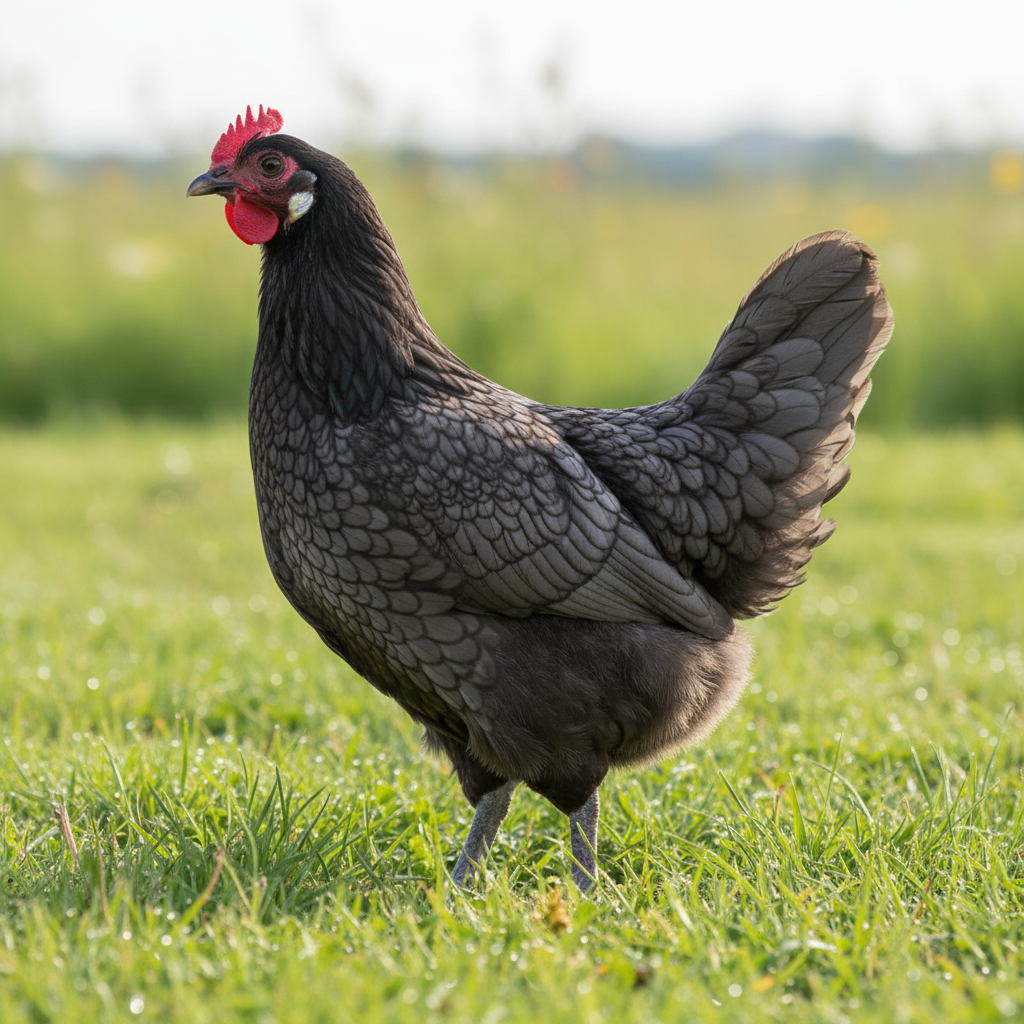
Andalusian
Also known as Blue Andalusian
Also known as: Blue Andalusian
Is the Andalusian right for you? Take the Breed Matcher →About the Andalusian
The Andalusian chicken is known for its striking blue-gray plumage and white ear lobes. They are medium-sized birds with a calm and friendly temperament, making them a good choice for backyard keepers. This breed is distinctive for its ability to adapt well to various environments and its consistent white egg production.
History
The Andalusian chicken originated in the Andalusia region of Spain, where it was developed in the late 19th century. Initially bred for both ornamental and egg-laying purposes, the breed gained popularity in other countries, particularly in the United States, where it was introduced in the early 20th century.
Care tips
Andalusians thrive in moderate climates and may not do as well in extreme temperatures. They require sufficient space to roam and forage, as they can be curious and active birds. While they are generally not broody, providing nesting boxes can encourage natural behaviors when they do become broody.
Color varieties
Fun facts
- Andalusians were among the first breeds exported from Spain to the U.S.
- Their blue feathers can vary in shade, adding to their visual appeal.
- This breed is known for its hardiness and resilience across different climates.
- Andalusian hens average 180-200 white eggs per year.
What Andalusians are like
Andalusians are a Mediterranean breed associated with Andalusia in Spain, developed into their modern form with help from British breeders. They are best known for their blue color, a slate gray with darker lacing on each feather. They are light, upright and active, and they lay white eggs.
The blue color problem
Blue Andalusians do not breed true. A bird with one copy of the blue gene is blue. Two copies make splash, a pale bird with flecks. No copies make black. Breeding two blues gives roughly half blue, a quarter black and a quarter splash. Breeding black to splash gives nearly all blue chicks. That is useful to know if you plan to hatch your own, since blacks and splashes are still Andalusians.
Day to day
- Active, alert and good foragers.
- Often flighty. They fly well, so a covered run helps.
- Good layers of white eggs, rarely broody.
- Generally not aggressive, but not usually cuddly.
Their large single combs are prone to frostbite in cold climates. They do well in heat with shade, since they are light and lean. They are a good choice for the hot climate breed list.
Andalusian vs Ancona and Leghorn
All three are Mediterranean white egg layers. The Ancona is black with white tips, and the Leghorn is the top layer of the group. Andalusians are chosen mostly for their color and as a heritage breed.
Where to find them
Several hatcheries sell Blue Andalusians, though shipments may include blacks and splashes. Breeders offer better lacing and color. They are considered a conservation breed in the US.
Common questions about Andalusians
Why did my blue Andalusians hatch black chicks?
Blue does not breed true. Blue to blue pairings produce some black and splash chicks.
Are Andalusians good layers?
Yes. Expect a good supply of white eggs.
Are Andalusians good in cold weather?
They can manage, but their big single combs need protection from frostbite.
