

Lakenvelder
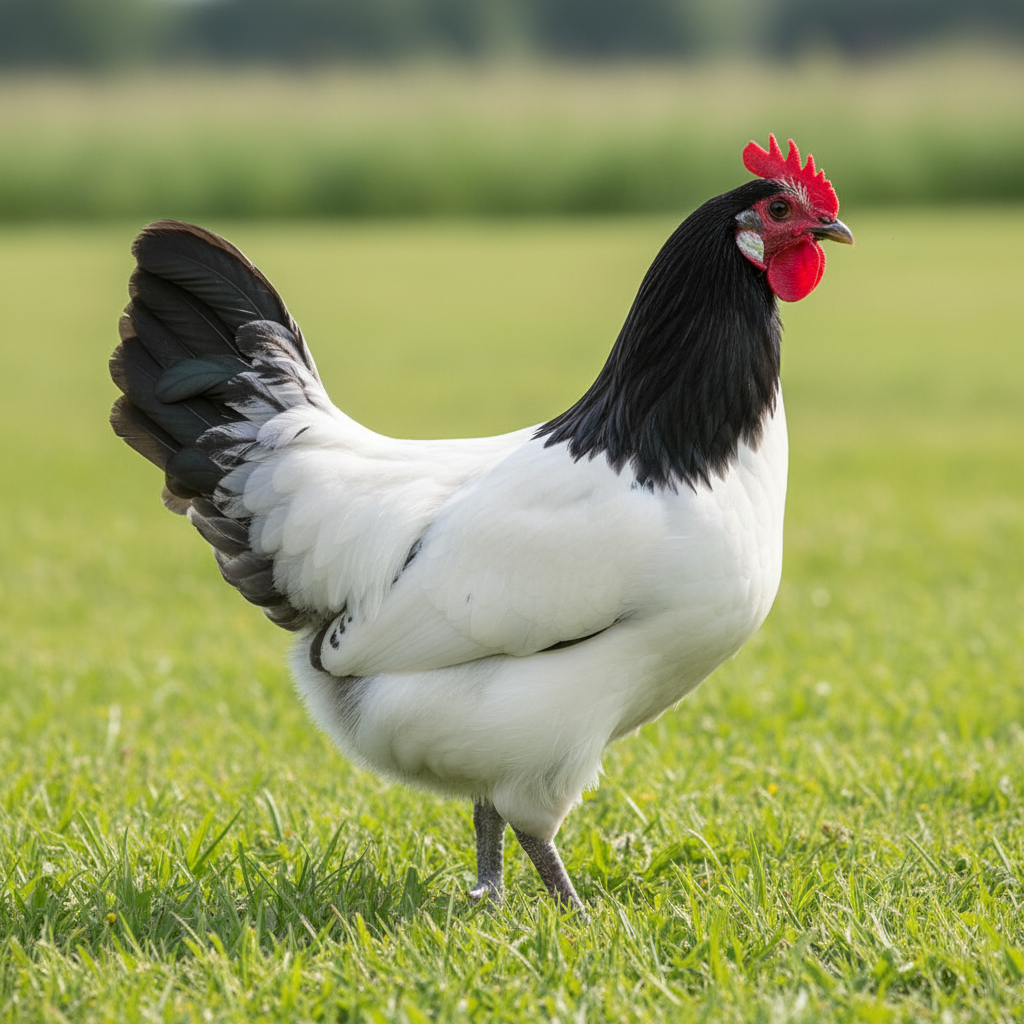
Black and white shadow-on-a-sheet pattern.
Is the Lakenvelder right for you? Take the Breed Matcher →About the Lakenvelder
Lakenvelders are striking birds with a unique black and white pattern resembling shadows on a sheet. They have a slim, upright posture and a typical Continental build, with a small comb and wattles. Known for their calm demeanor, they are generally friendly and get along well with other breeds. Their distinctive appearance and lively personality make them a favorite among backyard keepers.
History
The Lakenvelder breed originated in the Netherlands and Germany, where they were developed for their egg-laying capabilities. They gained popularity in the late 19th century, particularly in Europe as a reliable source of white eggs. Their unique coloration and good temperament helped them spread to backyard flocks around the world.
Care tips
Lakenvelders are hardy birds that adapt well to various climates, requiring a moderate amount of space due to their active nature. They are not particularly prone to brooding, making them primarily focused on egg production. Regular interaction can enhance their friendly temperament, as they thrive on companionship.
Color varieties
Fun facts
- Lakenvelders are excellent layers, producing around 200 white eggs annually.
- The breed is known for its unique shadow pattern and striking appearance.
- They are relatively quiet birds, making them suitable for urban settings.
- Lakenvelders were recognized by the American Poultry Association in 1991.
Keeping Lakenvelders
The Lakenvelder comes from the border area of Germany and the Netherlands and has been around since at least the 1800s. Its pattern is striking, a white body with a solid black neck and tail. The Dutch name is often explained as a shadow on a sheet, which fits the look.
Day to day
Lakenvelders are a light, active breed. They are alert, quick and fairly flighty, and they do not usually enjoy being handled. Many keepers like them for exactly that reason. They are great foragers and often avoid predators well. They fly better than heavy breeds, so a covered run or tall fence helps.
Laying
Hens lay white or lightly tinted eggs, small to medium, at a good rate. They rarely go broody. Like other light breeds, they may start earlier than heavy breeds and lay well in their first couple of years.
Climate
Their light build handles heat well. Their single combs can get frostbite in cold weather, so keep the coop dry and well ventilated.
Show quality is hard
The pattern is tricky to breed well. Clean white bodies with sharp black necks and tails take careful selection, and many birds show some smudging. That is fine for a backyard bird, but it matters if you want to show.
How they compare
The Vorwerk has the same black neck and tail pattern on a buff body and is a bit calmer and heavier. The Leghorn is a similar light, productive layer that is much easier to find.
Rarity
Lakenvelders are uncommon in the US and have appeared on the Livestock Conservancy priority list. A few hatcheries and breeders keep them.
Common questions about Lakenvelders
Are Lakenvelders good layers?
Yes. They are steady layers of white or lightly tinted eggs.
Are Lakenvelders friendly?
They are usually shy and flighty, though some tame with regular handling.
Do Lakenvelders go broody?
Rarely.
