

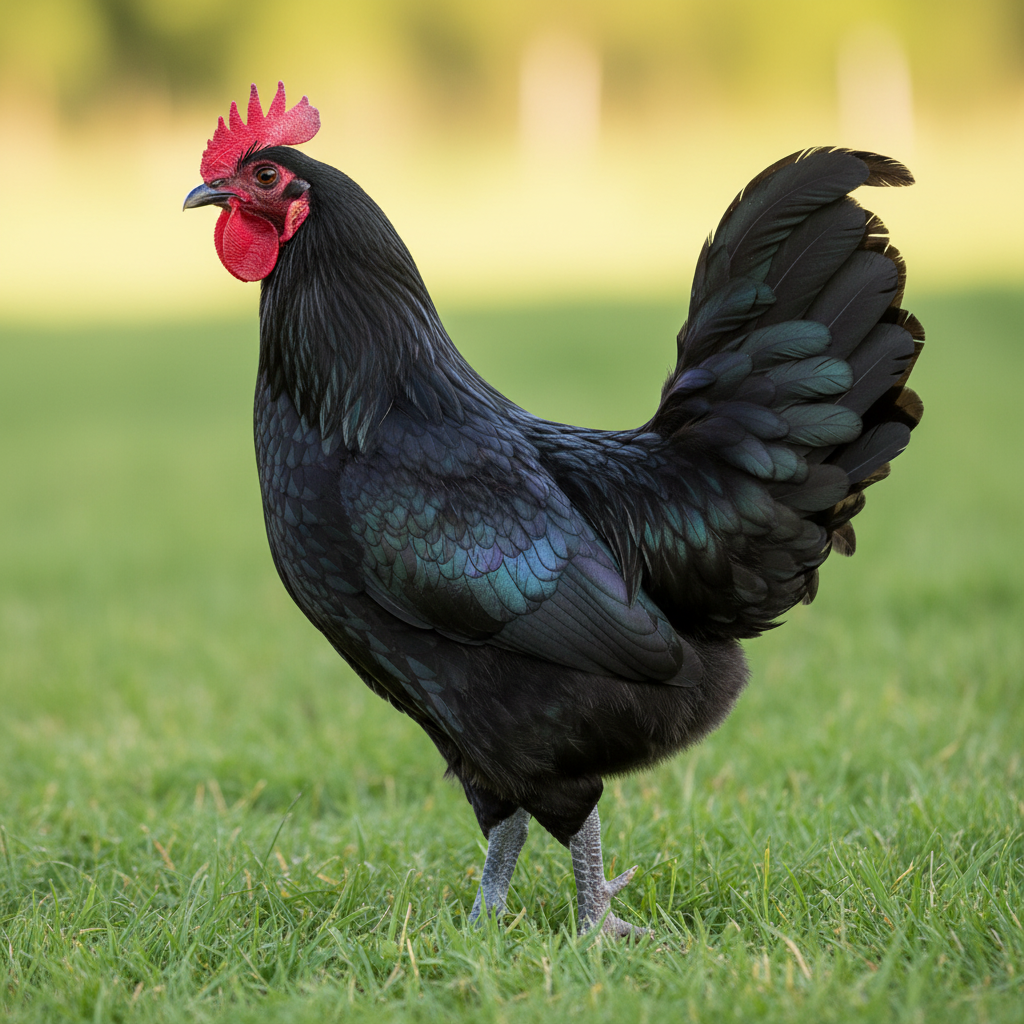
Langshan
The Langshan is a large, gentle breed known for its unique feathering and good egg production.
Is the Langshan right for you? Take the Breed Matcher →About the Langshan
Langshans are notable for their long, flowing feathers and upright postures. They have a calm and friendly temperament, making them suitable for families. Their distinctive appearance includes a broad head and dark feathers, usually with a greenish sheen. This breed is also known for effective egg production and meat quality.
History
The Langshan breed originated in China and was developed in the 19th century, around the Qing dynasty. It gained popularity in the West after being brought to England in the 1870s, where it was refined and recognized as a distinct breed.
Care tips
Langshans thrive in a spacious environment, appreciating room to forage and roam. They are generally hardy but can be prone to broodiness, making them excellent sitters for hatching eggs. Provide a balanced diet to ensure health and optimal egg production.
Fun facts
- Langshans were one of the earliest Asian breeds recognized in the West.
- They typically lay around 150 to 200 medium-sized brown eggs per year.
- Langshans are known for their gentle nature, making them great pets.
- The breed’s unique feathering requires less grooming than some other breeds.
Living with Langshans
The Langshan comes from China and reached England in the 1870s. In Britain, one line became known as the Croad Langshan after the family who imported it. Langshans are tall, deep-bodied birds with lightly feathered legs and a U-shaped profile, with the tail held high. Black is the classic color, with white and blue also kept. The breed played a part in the making of the Orpington and the Australorp.
Day to day
Langshans are calm, gentle and fairly quiet. They are big but graceful, and many are easy to handle. They forage well but also cope with confinement. Roosters are usually mellow for their size.
Laying
Hens lay brown eggs, and some lines lay eggs with a plum or purplish bloom. They are known as decent winter layers. Some go broody. They mature slower than production breeds.
Space and roosts
Langshans are tall, long-legged birds. Give them a coop with enough head room, and keep roosts at a sensible height so they do not land hard coming down. Leg feathers need a dry run, and check them for scaly leg mites.
Climate
They handle cold well. Roosters' single combs are the part to protect in a hard freeze. Black birds need shade in summer heat.
How they compare
Against the Brahma, the Langshan is taller and leaner with fewer leg feathers, and the two breeds share a similar calm nature. Langshans are easier on feed than Brahmas for their size.
Rarity
Langshans are uncommon in the US and have appeared on the Livestock Conservancy priority list. A few hatcheries and breeders keep them. In the UK, the Croad Langshan has its own breed club.
Common questions about Langshans
What color eggs do Langshans lay?
Brown eggs, sometimes with a plum colored bloom.
Are Langshans good with kids?
Usually, yes. They are calm and gentle.
Are Langshans cold-hardy?
Yes. Watch roosters' single combs in very cold weather.
