

Annual Molt
A normal annual feather replacement, usually in fall as daylight shortens. Birds look ragged, stop laying, and act subdued. Not an illness.
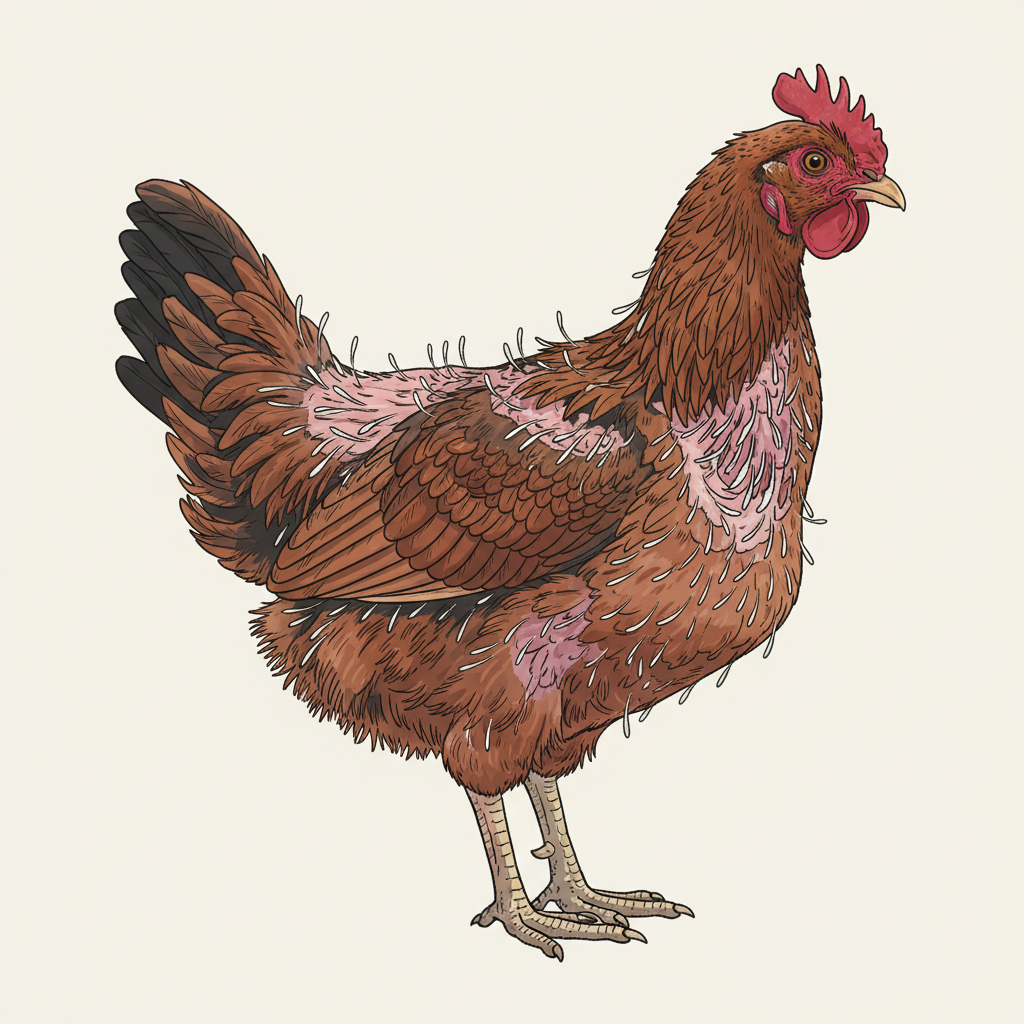
Mix of AI illustrations and anonymized real cases shared by community keepers. Visual severity varies by bird, age, and stage.
Symptoms
- Feather loss in patches
- New pin feathers visible
- Drop in egg production
- Quiet behavior
- Reduced appetite
Treatment
Switch to a higher protein feed (20 percent or grower ration) until new feathers come in. Cut back on treats. Avoid handling, new pin feathers are tender. Lay resumes once feathering finishes.
Prevention
Molt is healthy and cannot be prevented. Support nutrition and keep stress low while it runs its course.
Typical recovery
30 to 90 days with prompt care.
Helping your flock through the annual molt
Molt is when chickens drop old feathers and grow new ones. It usually happens once a year, often in late summer or fall as days get shorter. It is normal, but it is hard on their bodies. Feathers are mostly protein, so a molting hen puts her energy into regrowth and usually stops laying.
What a normal molt looks like
- Feathers all over the coop floor, often starting at the head and neck and moving down the body.
- Pin feathers, which look like little quills, poking through the skin.
- Less laying, or none at all.
- A grumpy hen who does not want to be touched.
- Some hens molt quickly and look bald for a short while. Others molt slowly over months.
What to do during molt
- Boost protein. Switch to or mix in a higher protein feed, or add protein treats in moderation. The protein during molt guide covers the details.
- Cut back on scratch and low protein treats.
- Handle gently, if at all. Pin feathers carry a blood supply and are sore when touched.
- Keep them out of drafts and wet weather, since they lose some insulation.
- Do not add new birds or make big changes. Molt is stressful enough.
How to tell molt apart from a problem
Molt is even and follows a pattern, with new feathers coming in behind the old ones. Missing feathers in one spot, broken feathers, or scabby skin point elsewhere. Bare backs in hens with a rooster are mating damage. Crawling specks and dirty-looking vent feathers mean mites or lice. One bird picking at another is feather pecking. The feather loss page sorts through these.
When to call a vet
Molt itself does not need a vet. Call if a molting bird is lethargic, stops eating, loses a lot of weight, or has red or swollen skin. A broken blood feather that keeps bleeding also needs attention. Apply gentle pressure, and if it does not stop, call a vet.
Molt and eggs
Expect laying to pause for several weeks to a couple of months. Most hens come back into lay once new feathers are in, and many lay better shells afterwards. There is no reason to worry about eating eggs from a molting hen. Some keepers add extra light during molt to keep laying going, but it is often better to let hens rest.
Why some birds molt harder
Older hens and high-production breeds often have more dramatic molts. Stress, a hard broody spell, or a sudden change in light can trigger an out of season or partial molt.
Rest of the flock
Molt is not contagious, though hens often molt around the same time because they share the same daylight. Keep an eye on bullying, since molting hens slip down the pecking order.
Common questions about chicken molting
How long does a chicken molt last?
Often several weeks, sometimes two or three months depending on the hen.
Do chickens stop laying when they molt?
Usually, yes. Laying returns once feathers grow back.
Why is my young chicken molting?
Chicks and pullets go through juvenile molts as they grow. That is normal.
