

Soft Shell or Shell Less Eggs
An occasional soft egg is normal for new or stressed layers. Persistent soft shells point to a calcium deficiency, illness (often IB), heat stress, or aging reproductive tract.
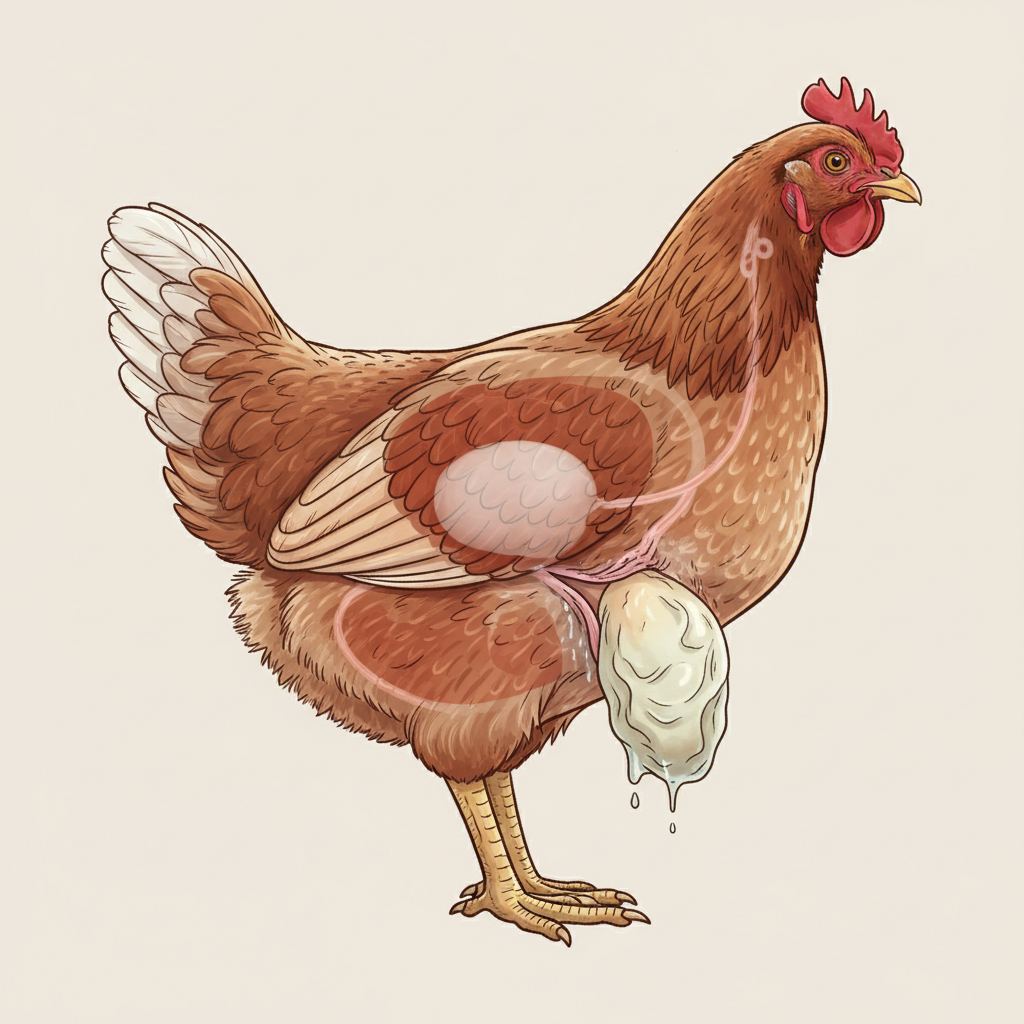
Mix of AI illustrations and anonymized real cases shared by community keepers. Visual severity varies by bird, age, and stage.
Symptoms
- Soft or wrinkled egg shells
- Shell less eggs
- Drop in egg production
- Misshapen eggs
Treatment
Offer oyster shell free choice in a separate dish. Check the layer ration is calcium balanced. Rule out infectious bronchitis if multiple birds are affected. Reduce heat and stress in summer.
Prevention
Always have oyster shell available. Provide shade and cool water in summer. Do not over light hens out of season. Replace very old hens if you depend on egg production.
Steps to take when a hen lays soft or shell-less eggs
A soft or shell-less egg means the shell was not finished before the egg left the hen. Usually it is calcium, age or stress. Sometimes it is a sign of illness, and occasionally a soft egg gets stuck inside and causes trouble. This page is about what to do and how to tell when it is more than a feed problem.
What to check today
- Find out who is laying them. Soft eggs often turn up under the roost in the morning.
- Look at what is in the feeder. A complete layer feed should be most of the diet.
- Offer oyster shell in its own dish, all the time.
- Cut back on scratch, bread and kitchen scraps, which dilute calcium.
- Think about recent stress. Heat waves, predators, moving and new birds all disrupt shells.
- Watch the hen. Is she eating, active and passing normal droppings?
Common causes
- New layers whose systems are still settling.
- Older hens laying larger eggs with less shell per egg.
- Low calcium or low vitamin D from poor diet or too many treats.
- Heat stress, which is linked to thinner shells.
- Stress at night causing a hen to release an egg early.
- Respiratory viruses like infectious bronchitis.
How to tell this apart from look-alikes
If the hen is straining, pumping her tail or standing upright, a soft egg may be stuck, which is egg binding and needs action today. A swollen, squishy belly with lethargy points to egg yolk peritonitis, since soft eggs can break inside. If many hens lay soft or wrinkled shells and some sneeze, look at infectious bronchitis. For more on the egg side, the shell-less eggs page covers patterns and timing.
When to call a vet
Call an avian or poultry vet if she stops eating, has a swollen belly, keeps straining, or if soft eggs continue for weeks despite good feed and oyster shell. Ask a vet before giving any calcium beyond oyster shell, since the type and amount matter.
Supportive care
Keep her calm and comfortable, with shade and cool water in hot weather. A dim, quiet coop at night lowers stress. Do not handle her roughly while she is laying.
Prevention
Layer feed as the main diet. Oyster shell free choice. Treats kept small. Do not feed layer feed to chicks or roosters, since too much calcium harms them. Keep the coop secure so night-time scares are rare.
Eggs and the rest of the flock
Throw soft and shell-less eggs away. Without a solid shell, bacteria get straight to the contents. Collect eggs often so hens do not learn to eat broken ones. If several hens are affected, look for a shared cause like feed, heat or illness. If a vet prescribes anything, check the product label or ask a vet about eggs.
Common questions about soft and shell-less eggs
Is one soft egg a problem?
Usually not. An occasional one is common, especially from new layers.
Can a soft egg get stuck?
Yes. Soft eggs are harder to push out and can lead to egg binding.
How fast does oyster shell help?
Shell quality often improves within a couple of weeks once diet and calcium are right.
